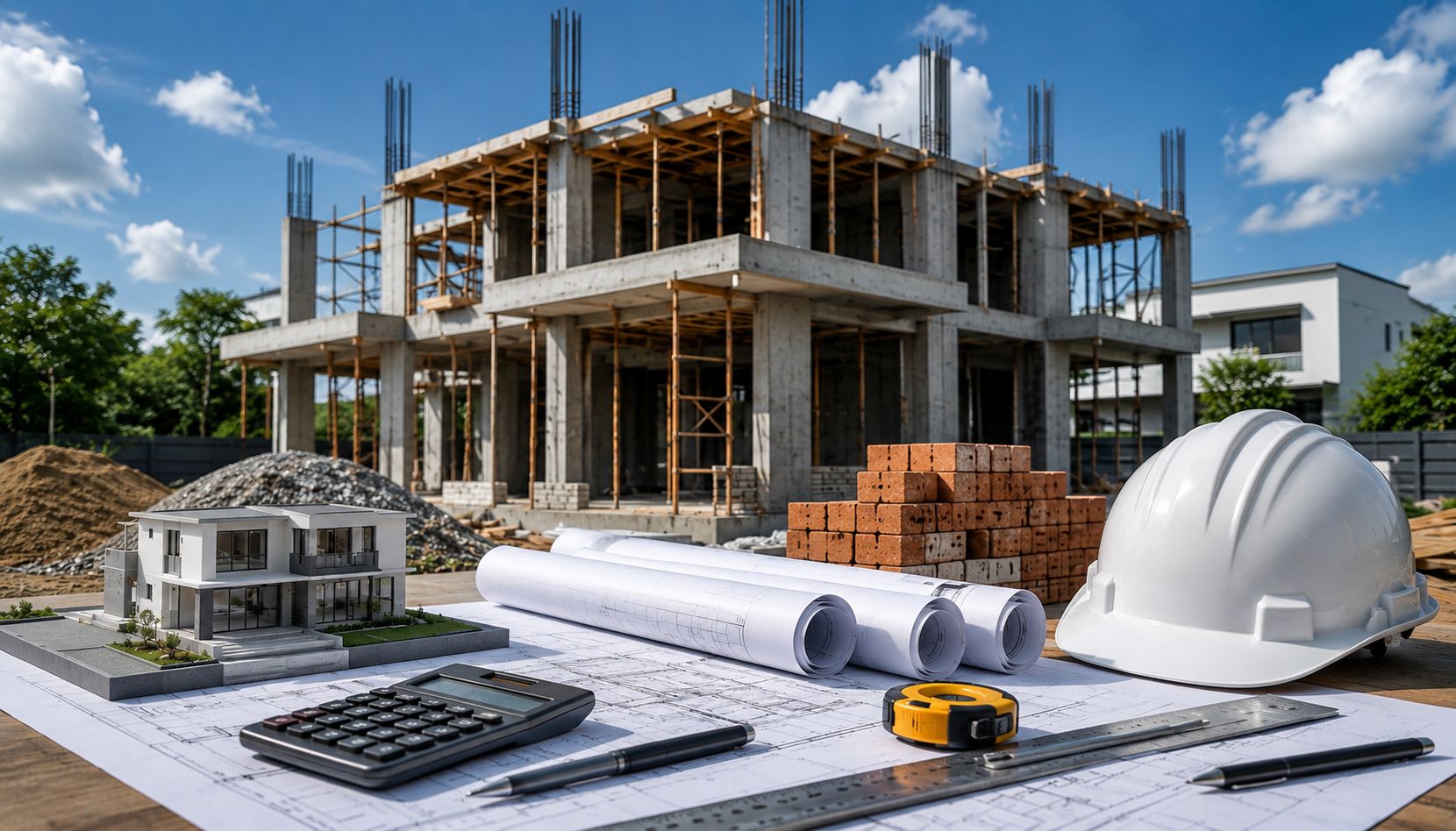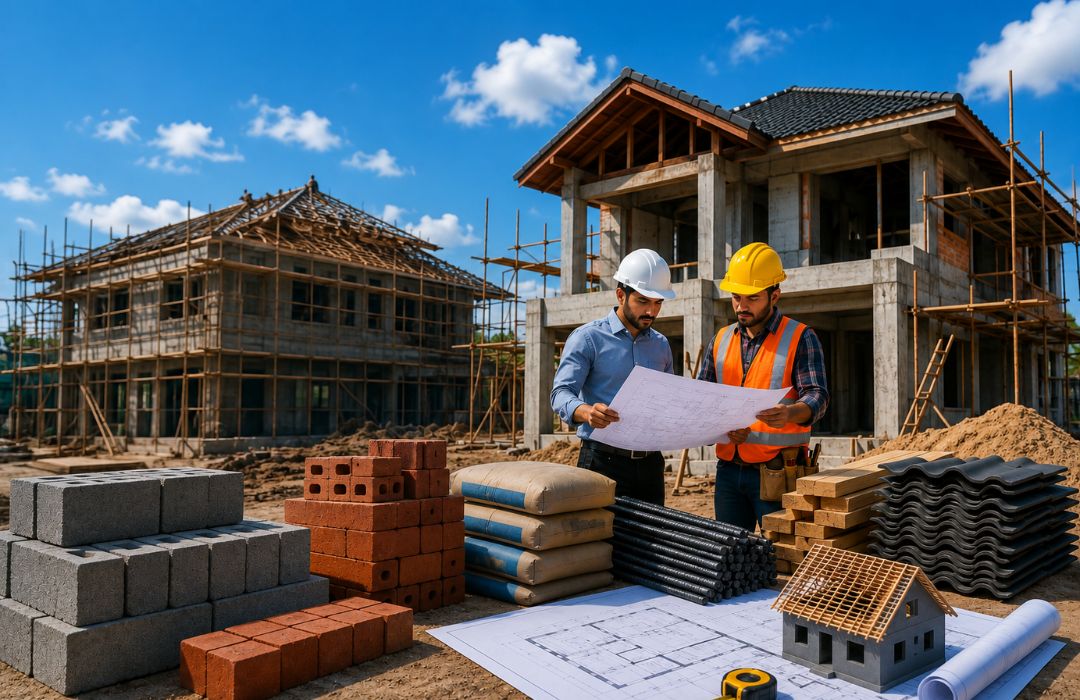
Building construction is not one job, it’s a combination of many important works completed in the right order. From foundation to flooring and final finishing, each stage plays a key role in creating a strong, functional, and long-lasting building.
In this blog, you’ll learn the complete construction works list, major building construction stages, and why each step matters. RR INFRA helps simplify construction through proper planning, skilled execution, quality materials, and professional supervision.
Key Takeaways
- Construction involves multiple stages, from site preparation to final handover.
- Foundation and structural work are essential for building strength and safety.
- Electrical, plumbing, waterproofing, and roofing ensure functionality and durability.
- Flooring, painting, doors, windows, and interiors complete the finishing work.
- Quality materials, skilled workers, proper planning, and regular inspections improve construction quality.
- Understanding the construction works list helps homeowners and builders monitor projects and make better decisions.
What Is Construction Work?
Construction work refers to all the activities involved in planning, building, finishing, and maintaining a structure. It can include site preparation, excavation, foundation work, structural construction, masonry, electrical work, plumbing, flooring, painting, waterproofing, and many other activities.
Construction work is generally divided into different stages so that each activity can be completed correctly before the next stage begins.
The main objective of construction work is to create a building that is:
- Safe and structurally stable
- Durable and long-lasting
- Functional and comfortable
- Resistant to weather and moisture
- Visually appealing
- Suitable for its intended purpose
Construction Works List: Major Types of Building Construction Work
Below is a detailed construction works list covering the major activities commonly involved in building construction.
1. Site Preparation Work
Site preparation is the first major stage of building construction. Before construction begins, the site needs to be inspected and prepared.
Common site preparation activities include:
- Land surveying
- Soil testing
- Clearing vegetation and debris
- Removing unwanted structures
- Site leveling
- Grading
- Marking the building layout
- Preparing temporary access roads
- Arranging construction storage areas
Proper site preparation helps reduce construction problems and provides a suitable base for excavation and foundation work.
2. Excavation Work
Excavation involves removing soil from the ground to create space for foundations, basements, trenches, and underground services.
Common excavation activities include:
- Foundation excavation
- Basement excavation
- Utility trenching
- Soil removal
- Earth filling
- Backfilling
- Ground leveling
The depth and width of excavation depend on the building design, soil conditions, and foundation type.
Proper excavation is important because incorrect depth or unstable excavation can affect the foundation and overall building safety.
3. Foundation Work
The foundation transfers the weight of the building safely to the ground. It is one of the most important parts of the construction process.
Common foundation types include:
- Isolated footing
- Combined footing
- Strip footing
- Raft foundation
- Pile foundation
- Other shallow and deep foundation systems
Foundation construction generally involves excavation, reinforcement placement, formwork, concrete pouring, curing, and waterproofing where required.
A properly designed and constructed foundation helps provide long-term stability to the building.
4. Structural Construction Work
Structural work creates the main framework of the building. It carries the loads of floors, walls, roof, furniture, occupants, and other elements.
Major structural components include:
- Columns
- Beams
- Slabs
- Reinforcement steel
- RCC structures
- Load-bearing walls
- Staircases
Structural construction should follow approved engineering drawings and specifications. Quality control is especially important during reinforcement placement and concrete work.
5. Masonry Work
Masonry work involves constructing walls using materials such as bricks, concrete blocks, or AAC blocks.
Masonry work may include:
- External walls
- Internal partition walls
- Boundary walls
- Brickwork
- Blockwork
- Mortar application
- Wall alignment and leveling
Proper masonry helps provide strength, separation between spaces, insulation, and a suitable surface for plastering.
6. Roofing Work
Roofing protects the building from sunlight, rain, wind, and other environmental conditions.
Common roofing activities include:
- RCC roof construction
- Sloped roof installation
- Roof waterproofing
- Insulation
- Drainage arrangements
- Roof finishing
A properly designed roof should provide effective water drainage and protection against leakage.
7. Plastering Work
Plastering provides a smooth and finished surface to walls and ceilings. It also helps protect masonry surfaces.
Plastering work usually includes:
- Cleaning the surface
- Preparing the mortar
- Applying plaster
- Leveling the surface
- Finishing
- Curing
Both internal and external walls may require plastering depending on the building design and finish requirements.
8. Flooring Work
Flooring is an important finishing activity that improves both the appearance and functionality of a building.
Common flooring materials include:
- Vitrified tiles
- Ceramic tiles
- Marble
- Granite
- Natural stone
- Wooden flooring
- Vinyl flooring
Before flooring installation, the surface should be properly leveled and prepared. Correct installation helps prevent cracks, uneven surfaces, and loose tiles.
9. Waterproofing Work
Waterproofing protects a building from water penetration and moisture-related damage.
Important waterproofing areas include:
- Bathrooms
- Terraces
- Basements
- Balconies
- External walls
- Foundations
- Water tanks
Poor waterproofing can lead to dampness, leakage, mold growth, paint damage, and deterioration of building materials.
Therefore, waterproofing should be planned and executed carefully.
10. Electrical Work
Electrical work provides power and lighting throughout the building.
It can include:
- Electrical wiring
- Switches and sockets
- Lighting points
- Distribution boards
- Earthing
- Power connections
- Electrical safety systems
- Backup power provisions
Electrical installation should be carried out by qualified professionals and according to applicable safety requirements.
11. Plumbing and Sanitary Work
Plumbing work manages water supply, drainage, and sanitation within the building.
Common plumbing activities include:
- Water supply installation
- Drainage pipes
- Sewage connections
- Bathroom plumbing
- Kitchen plumbing
- Water tank connections
- Sanitary fixture installation
- Leakage testing
Plumbing systems should be tested before walls, ceilings, and floors are fully finished so that potential problems can be identified early.
12. Door and Window Installation
Doors and windows provide access, ventilation, natural light, security, and insulation.
Common materials include:
- Wood
- Aluminium
- UPVC
- Glass
- Steel
Installation includes fixing frames, shutters, glass, locks, handles, hinges, and other hardware.
Proper alignment and sealing are important for durability and protection against water and air leakage.
13. Painting Work
Painting is one of the final finishing stages of construction.
A typical painting process includes:
- Surface cleaning
- Crack repair
- Putty application
- Primer application
- First coat
- Final coat
- Touch-up work
Exterior paints should provide suitable protection against weather conditions, while interior paints are selected based on appearance, durability, and room requirements.
14. HVAC and Ventilation Work
HVAC stands for Heating, Ventilation, and Air Conditioning. These systems help maintain indoor temperature, ventilation, and air quality.
Depending on the building, HVAC work may include:
- Air-conditioning systems
- Ventilation systems
- Duct installation
- Exhaust systems
- Air handling equipment
- Energy-efficient cooling systems
HVAC requirements can vary significantly between homes, offices, hospitals, hotels, and industrial buildings.
15. False Ceiling and Interior Finishing Work
False ceilings and interior finishing improve the appearance and functionality of indoor spaces.
Common work includes:
- Gypsum false ceilings
- POP work
- Ceiling lighting
- Decorative wall finishes
- Wall panels
- Interior partitions
- Decorative elements
Interior finishing should be planned according to the purpose and design of each room.
16. External Development Work
Construction does not end with the building structure. External development is also required to make the property functional.
It may include:
- Boundary walls
- Driveways
- Parking areas
- Footpaths
- Landscaping
- Outdoor lighting
- Stormwater drainage
- Gates
- Garden areas
These works improve accessibility, drainage, security, and the overall appearance of the property.
17. Fire Safety and Protection Work
Fire safety is particularly important in commercial, institutional, residential high-rise, and industrial buildings.
Depending on the building requirements, fire protection may include:
- Fire alarms
- Fire extinguishers
- Fire hydrants
- Sprinkler systems
- Emergency exits
- Fire-resistant materials
- Emergency lighting
- Safety signage
Fire safety systems should be designed and installed according to applicable regulations and the building's specific requirements.
18. Cleaning and Final Handover Work
After construction and finishing work are completed, the building goes through final inspection and cleaning.
This stage may include:
- Removing construction debris
- Cleaning floors and windows
- Checking electrical systems
- Testing plumbing systems
- Inspecting doors and windows
- Checking paint and finishes
- Identifying defects
- Completing corrections
- Final quality inspection
- Handover
A final inspection ensures that major construction activities have been completed before the property is occupied or handed over.
Types of Construction Work Based on Building Category
Construction work can also be classified according to the type of building being constructed.
Residential Construction
Residential construction includes:
- Independent houses
- Villas
- Apartments
- Townhouses
- Residential complexes
The focus is generally on safety, comfort, space planning, durability, and essential utilities.
Commercial Construction
Commercial construction includes:
- Office buildings
- Retail stores
- Shopping complexes
- Hotels
- Restaurants
- Business centers
These projects may require more complex electrical, HVAC, fire safety, and interior systems.
Industrial Construction
Industrial construction includes:
- Factories
- Warehouses
- Manufacturing facilities
- Workshops
- Industrial plants
These projects often require specialized structural systems, heavy equipment provisions, ventilation, utilities, and safety systems.
Institutional Construction
Institutional construction includes:
- Schools
- Colleges
- Hospitals
- Government buildings
- Training centers
Such buildings often have specific requirements related to accessibility, safety, ventilation, electrical systems, and public use.
Building Construction Process: From Foundation to Finishing
The general building construction process can be understood through the following sequence:
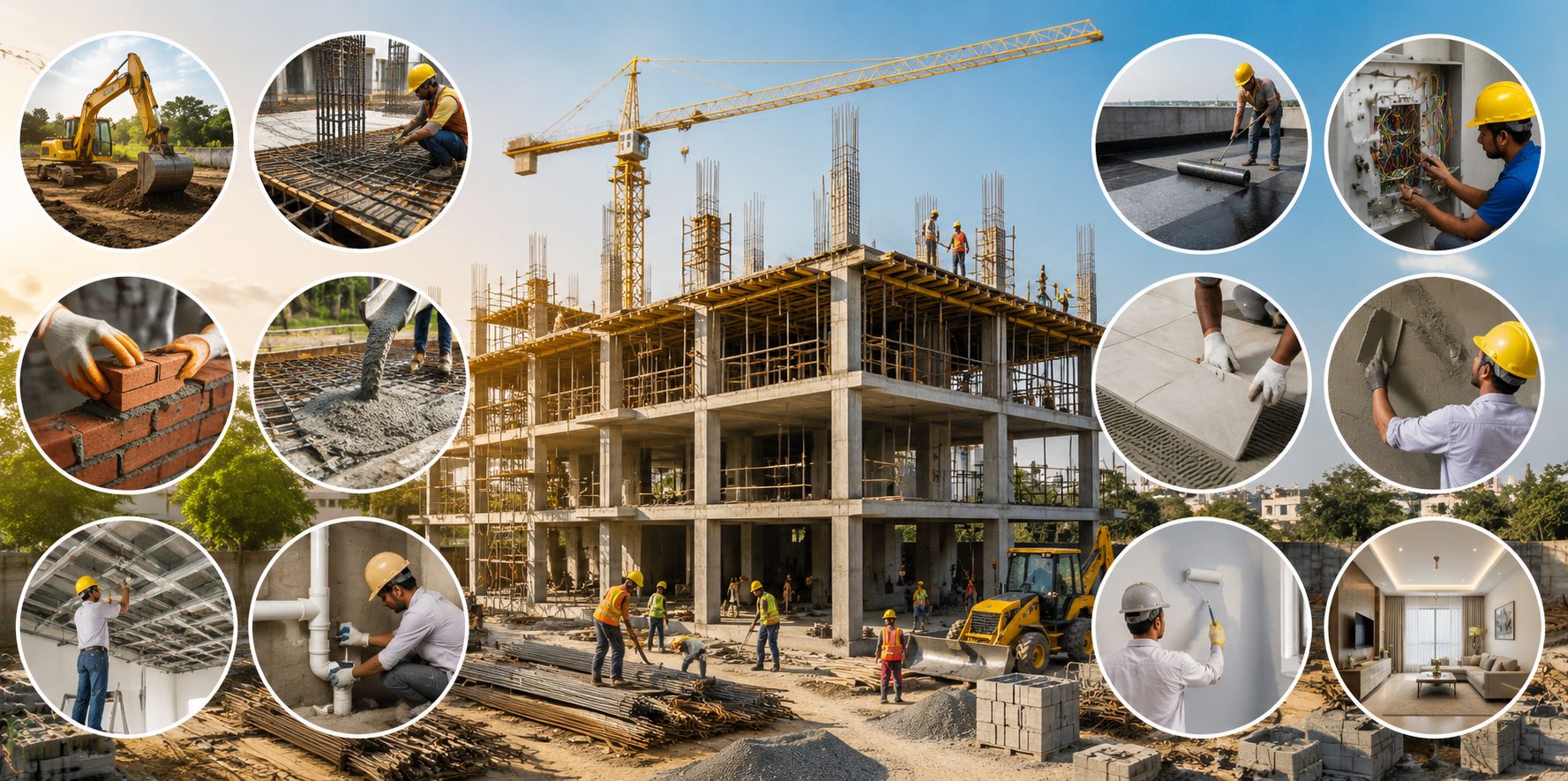
Site preparation → Excavation → Foundation → Structural work → Masonry → Roofing → Electrical and plumbing → Plastering → Waterproofing → Flooring → Doors and windows → Painting → External development → Final inspection → Handover
The exact sequence can change depending on the project design, construction method, building type, weather conditions, and site requirements.
Essential Materials Used in Building Construction
Different construction activities require different materials. Some of the most commonly used building construction materials include:
- Cement
- Sand
- Aggregates
- Bricks
- AAC blocks
- Concrete
- Reinforcement steel
- Tiles
- Marble
- Granite
- Glass
- Wood
- Aluminium
- UPVC
- Pipes
- Electrical cables
- Paints
- Waterproofing materials
The quality and suitability of materials can have a major impact on the durability and performance of a building.
Why Proper Construction Work Is Important
Every construction activity contributes to the final quality of a building. Proper execution can provide several benefits.
1. Better Structural Safety
Correct foundation and structural work help the building handle expected loads safely.
2. Longer Building Life
Quality materials and proper construction methods can reduce premature deterioration.
3. Lower Maintenance Costs
Good waterproofing, plumbing, electrical installation, and finishing can help reduce future repair requirements.
4. Better Comfort
Proper insulation, ventilation, electrical systems, plumbing, and interior finishing improve the experience of people using the building.
5. Better Property Value
A well-constructed and properly maintained building can have better long-term value.
Common Construction Work Mistakes to Avoid
Several mistakes can affect construction quality and increase project costs.
Common mistakes include:
- Starting construction without proper planning
- Ignoring soil conditions
- Using poor-quality materials
- Incorrect reinforcement placement
- Poor concrete mixing or curing
- Improper waterproofing
- Poor electrical installation
- Incorrect plumbing slopes
- Skipping quality inspections
- Poor surface preparation before painting
- Not following approved drawings
- Delaying necessary maintenance
Proper supervision and regular inspection can help identify many of these problems before they become expensive to fix.
How to Ensure Quality in Building Construction Work
Homeowners and project managers can follow several basic practices to improve construction quality.
Hire Qualified Professionals
Work with experienced architects, engineers, contractors, and skilled workers.
Use Suitable Materials
Select materials based on project requirements rather than choosing only on the basis of the lowest price.
Follow Approved Plans
Construction should follow approved drawings, specifications, and structural requirements.
Inspect Each Stage
Important activities such as reinforcement, concrete work, waterproofing, plumbing, and electrical installation should be checked before they are covered.
Maintain Proper Documentation
Keep records of drawings, material specifications, test reports, bills, approvals, and inspection details.
Focus on Safety
Workers should use appropriate safety equipment and follow safe construction practices throughout the project.
At this stage of a project, a professional construction company such as RR INFRA can help maintain proper coordination between different construction activities and ensure that work progresses in an organized manner.
Conclusion
Understanding the construction works list helps you see how a building transforms from an empty site into a complete, safe, and functional property. From foundation and structural work to plumbing, waterproofing, flooring, and painting, every stage matters.
Planning a construction project? Choose professionals who focus on quality, safety, and proper execution. RR INFRA delivers organized construction solutions with skilled workmanship and quality-focused practices. Get in touch with RR INFRA today to plan your construction project with confidence.