Choosing the right construction approach can have a major impact on your project's cost, timeline, quality and overall experience. Two common options are turnkey construction and traditional construction. While both models can deliver a successful building, they differ significantly in how design, materials, contractors, supervision and project responsibility are managed. If you are planning a residential, commercial, industrial or hospitality project, understanding these differences can help you choose the right model. A turnkey construction company can provide centralized project management, while traditional construction gives owners more direct control over individual contractors and materials.
Key Takeaways
- Turnkey construction provides a single point of responsibility for the project.
- Traditional construction gives the owner more direct control over individual contractors and materials.
- Turnkey projects can simplify coordination and project management.
- Traditional construction may offer flexibility when the owner has strong construction knowledge and time to supervise.
- A detailed scope of work, BOQ, specifications, timeline and payment terms are important under either model.
- The right construction partner should have relevant experience with projects similar to yours.
- Past projects, technical expertise, quality processes and contract transparency should be checked before making a decision.
What Is Turnkey Construction?
Turnkey construction is a project delivery model in which one construction company manages multiple stages of the project under a single agreement.
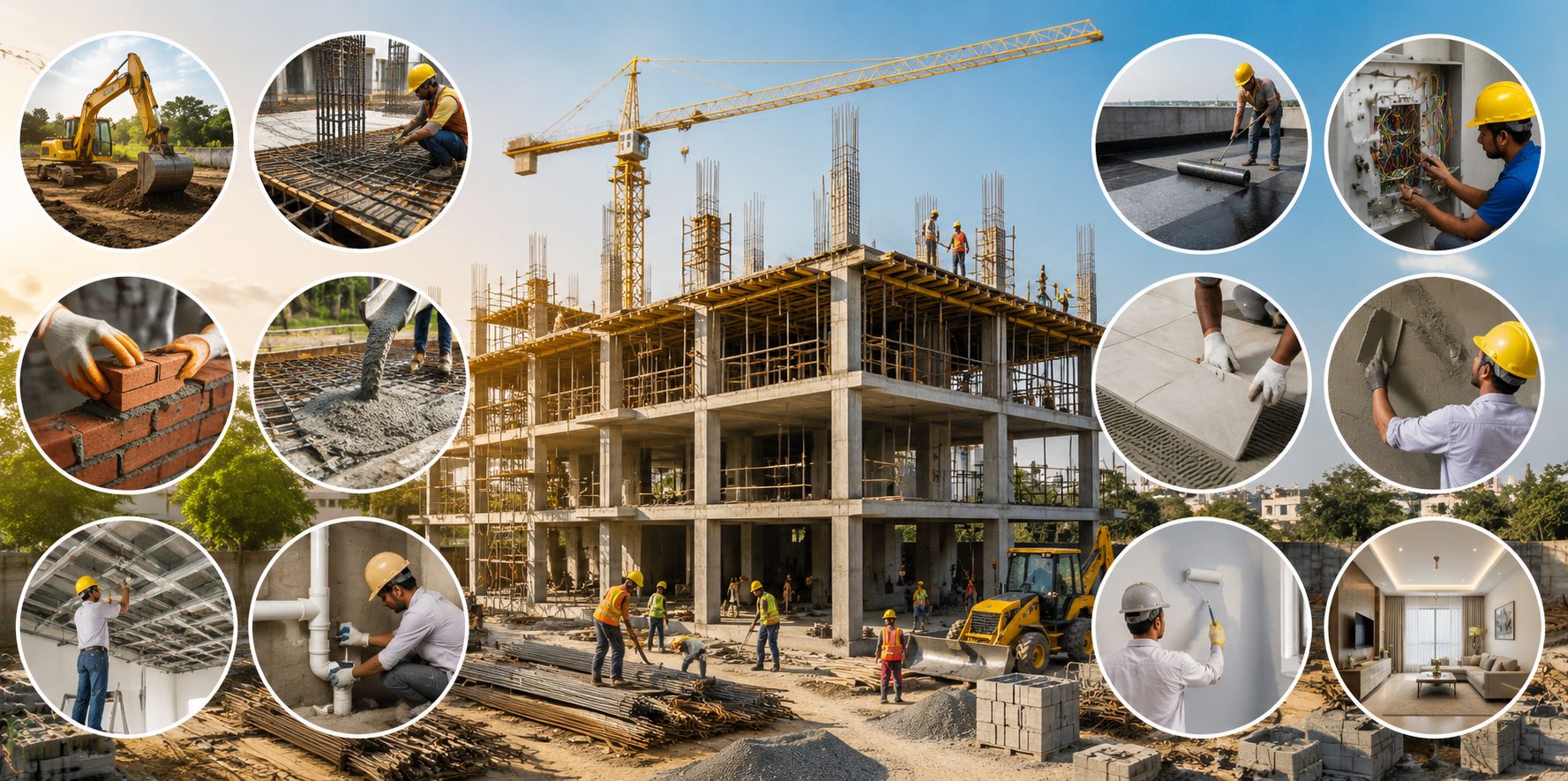
Depending on the contract, the scope may include architectural planning, structural design, approvals coordination, procurement, civil construction, electrical and plumbing work, interiors, finishing and final handover.
The objective is simple: the client should be able to hand over the project requirements to one responsible team and receive a completed property ready for use.
However, the exact scope of turnkey construction varies from company to company. Therefore, clients should never assume that every service is automatically included.
Before signing a contract, check:
- Design and architectural services
- Structural engineering
- Material specifications
- Civil construction
- Electrical work
- Plumbing
- Flooring and painting
- Interior work
- Landscaping
- Approvals and coordination
- Testing and inspections
- Handover requirements
- Warranty and defect-related terms
A clearly documented scope reduces misunderstandings later.
What Is Traditional Construction?
In traditional construction, the property owner generally manages different contractors, consultants, suppliers or specialists separately.
For example, an owner may hire an architect for design, a civil contractor for structural work, separate vendors for electrical and plumbing work, and different suppliers for finishing materials.
This approach can provide greater direct control. The owner can compare different vendors, select preferred materials and negotiate individual contracts.
However, this also means the owner may need to coordinate multiple parties.
If one activity is delayed, it can affect the work scheduled after it. For example, delays in civil work can affect electrical installation, plumbing, flooring and interior finishing.
This makes project coordination particularly important in traditional construction.
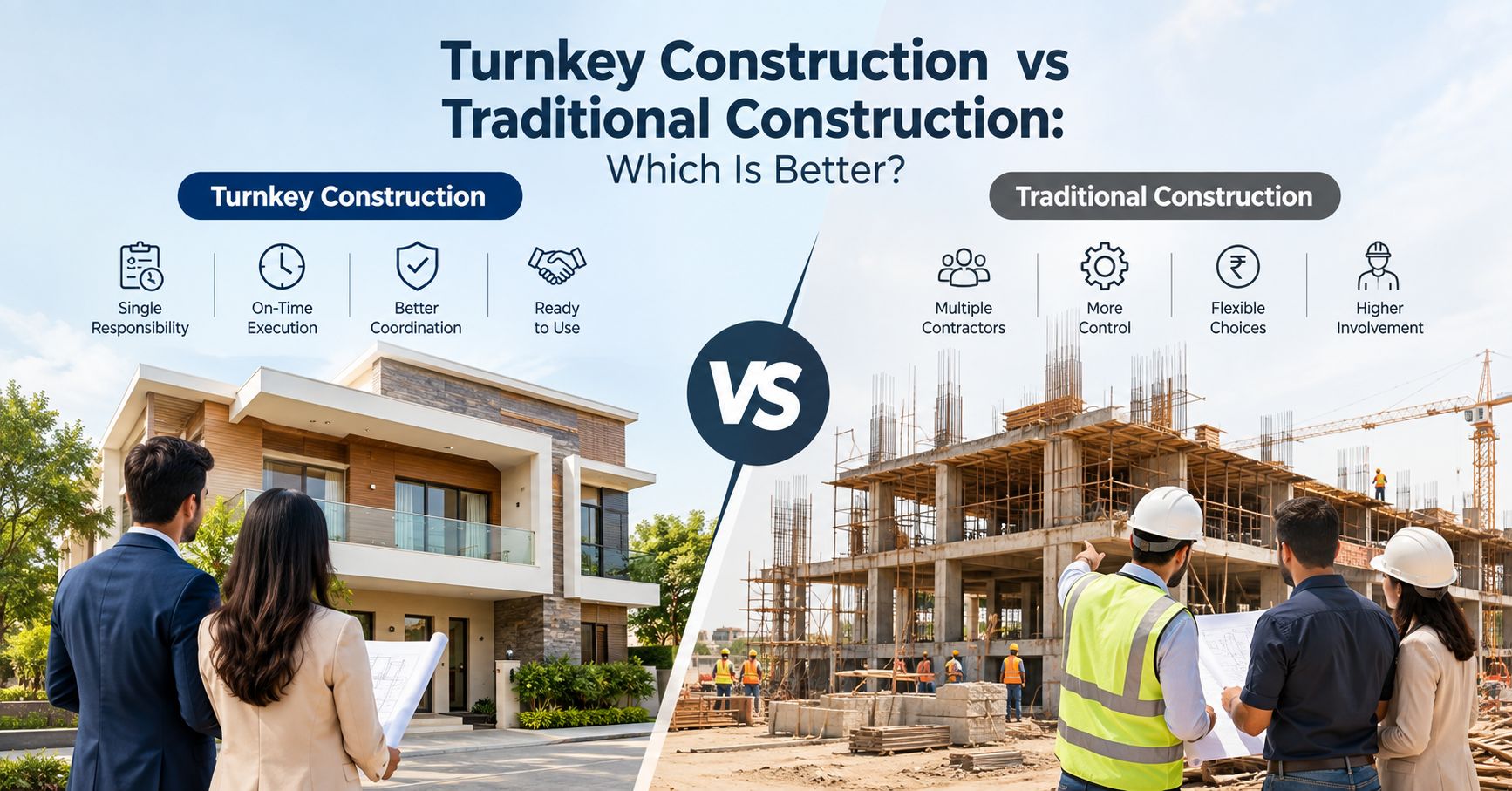
Turnkey Construction vs Traditional Construction
| Factor | Turnkey Construction | Traditional Construction |
|---|---|---|
| Project responsibility | Mainly handled by one company | Shared between multiple parties |
| Coordination | Centralized | Owner usually coordinates |
| Contractor management | Simpler | Multiple contractors may need management |
| Material selection | Based on agreed specifications | Owner may have more direct control |
| Owner involvement | Generally lower | Generally higher |
| Flexibility | Depends on contract | Usually higher |
| Cost management | Based on agreed scope and specifications | Owner manages multiple quotations |
| Quality monitoring | Managed through the appointed team | Owner needs to monitor different parties |
| Communication | Primarily with one main team | Communication with several vendors |
| Suitable for | Owners seeking convenience and centralized management | Owners wanting direct involvement and control |
1. Project Management and Coordination
One of the biggest differences between the two models is coordination.
With turnkey construction, the main contractor is responsible for coordinating different activities. This can make communication easier because the client does not have to independently manage every specialist.
Traditional construction requires the owner to coordinate architects, contractors, suppliers and other professionals.
For a small and straightforward project, this may be manageable. For a complex commercial or industrial project, coordination can become significantly more demanding.
2. Cost Control
Cost should not be compared simply by looking at the initial quotation.
A low initial quote may not include certain finishing works, design services, transportation, approvals, external development or other requirements.
With turnkey construction, the client can work with a defined scope and agreed specifications. This can make budgeting easier when the contract is properly prepared.
Traditional construction allows the owner to compare separate quotations and potentially select different vendors based on price and specifications. However, managing multiple quotes also requires more time and attention.
Before selecting either model, ask for a detailed BOQ and clearly understand what is included and excluded.
3. Control Over Materials
Traditional construction can provide the owner with greater direct control over material purchasing.
For example, the owner may personally compare brands, prices and specifications for tiles, sanitary fittings, electrical products, doors, windows and other materials.
In a turnkey model, material selection is generally based on the specifications agreed in the contract.
This does not mean that turnkey construction has to mean limited choice. The important point is to clearly document material brands, grades, specifications and approved alternatives before construction begins.
4. Quality Control
Quality depends more on the people, processes and supervision involved than simply on the construction model.
A well-managed turnkey project can have structured supervision and quality checks across different stages.
In a traditional model, the owner may have more direct involvement in selecting contractors and materials, but must also ensure that quality standards are consistently followed.
Important areas to monitor include:
- Foundation and structural work
- Concrete and reinforcement
- Waterproofing
- Masonry
- Electrical installations
- Plumbing
- Flooring
- Doors and windows
- Paint and finishing
- Final testing and inspection
Relevant experience also matters. Reviewing completed projects can help you understand the contractor's actual workmanship rather than relying only on promises.
5. Time and Project Scheduling
Construction involves multiple activities that depend on one another.
A delay in one stage can affect several following activities.
In turnkey construction, the main contractor is responsible for coordinating the project schedule. This can reduce the owner's management burden.
In traditional construction, the owner may need to ensure that each contractor arrives at the right stage and that materials are available when required.
Regardless of the model, a realistic schedule should account for design finalization, approvals, procurement, construction, inspections and finishing.
A construction timeline should therefore be treated as a managed plan rather than simply a promised completion date.
6. Owner Involvement
Your available time should be an important factor when choosing the construction model.
Turnkey construction is generally suitable for owners who have professional commitments or limited construction knowledge and prefer centralized project management.
Traditional construction can suit owners who have construction experience, enough time for site visits and the ability to coordinate multiple professionals.
Neither option is automatically better for everyone.
The better choice is the one that matches how much responsibility you are comfortable managing.
7. Which Option Offers More Flexibility?
Traditional construction generally gives the owner more freedom to change contractors, suppliers and individual materials.
However, too many changes during construction can create delays, additional costs and quality issues.
Turnkey construction can also provide flexibility if changes are permitted under the contract, but modifications may require approval from the project team and can affect the agreed budget or timeline.
For either model, major design and material decisions should ideally be finalized before construction begins.
When Is Turnkey Construction a Better Choice?
Turnkey construction may be a suitable option if:
- You want one primary point of contact.
- You have limited time to supervise construction.
- Your project involves several construction disciplines.
- You prefer centralized project management.
- You want design and execution to be coordinated.
- You are developing a commercial, hospitality or industrial property.
- You want responsibilities to be clearly defined in one contract.
For example, RR INFRA's portfolio includes turnkey industrial, commercial, hospitality and high-end residential projects, including the Channi Carpets & Textile Factory in Kukas, Artisav House in Amer and multiple commercial and residential developments in Jaipur and Rajasthan. These examples show why project-specific experience is important when evaluating a construction partner.
When Can Traditional Construction Be Better?
Traditional construction may work well if:
- You want direct control over contractors.
- You have construction knowledge or professional support.
- You want to source certain materials yourself.
- You have enough time for regular site supervision.
- You prefer negotiating separate vendor contracts.
- Your project has specific requirements that need independent specialists.
However, you should be prepared to manage communication, scheduling, procurement and quality across multiple parties.
What Should You Check Before Choosing a Construction Company?
Do not select a construction company only because of the lowest quotation.
Consider these factors:
Relevant Experience
Check whether the company has completed projects similar to yours in terms of size, purpose and complexity.
Technical Expertise
Look for qualified professionals and evidence of technical knowledge in planning, structural work, execution and project management.
Completed Projects
Ask to see previous projects and, where possible, understand the actual scope handled by the contractor.
Detailed Scope of Work
Make sure the agreement clearly states what is included and excluded.
Material Specifications
Check brands, grades, quantities and approved alternatives.
Quality Control
Ask how materials, workmanship and different construction stages are inspected.
Timeline and Payment Schedule
The contract should clearly explain milestones, payments and expected project timelines.
Post-Completion Support
Understand the warranty, defect resolution and handover process before signing.
These checks help move the decision away from marketing claims and towards verifiable experience and clearly defined responsibilities.
Common Mistakes to Avoid
Whether you choose turnkey or traditional construction, avoid these mistakes:
- Choosing a contractor only because of the lowest quotation
- Starting without a detailed scope of work
- Ignoring the BOQ and specifications
- Making frequent design changes during construction
- Not checking previous projects
- Failing to discuss the completion timeline
- Not documenting material specifications
- Making unclear payment arrangements
- Ignoring quality inspections
- Not understanding warranty and handover terms
Final Verdict: Turnkey or Traditional Construction?
There is no one construction model that works best for every project. Turnkey construction is ideal for owners who prefer centralized management, coordinated execution and less day-to-day involvement, while traditional construction can suit those who want greater control over contractors, materials and individual project stages.
Whichever approach you choose, focus on the contractor’s experience, technical expertise, completed projects, quality practices and contract transparency. For projects in Jaipur or Rajasthan, a clearly defined scope, realistic timeline, proper material specifications and documented responsibilities can help reduce delays, unexpected costs and coordination issues.