The wrong construction material can increase your costs, reduce durability, and create problems for years. The right one can make your building stronger, safer, and more reliable. But with so many building construction materials available, how do you know which ones are right for your project?
In this guide, we’ll explore the types of building construction materials, their uses, cost considerations, and tips for choosing the right materials. With RR INFRA, you can understand the importance of quality materials, proper planning, and reliable construction practices to build with greater confidence and long-term value.
Key Takeaways
- Building construction materials directly affect the strength, safety, durability, and appearance of a property.
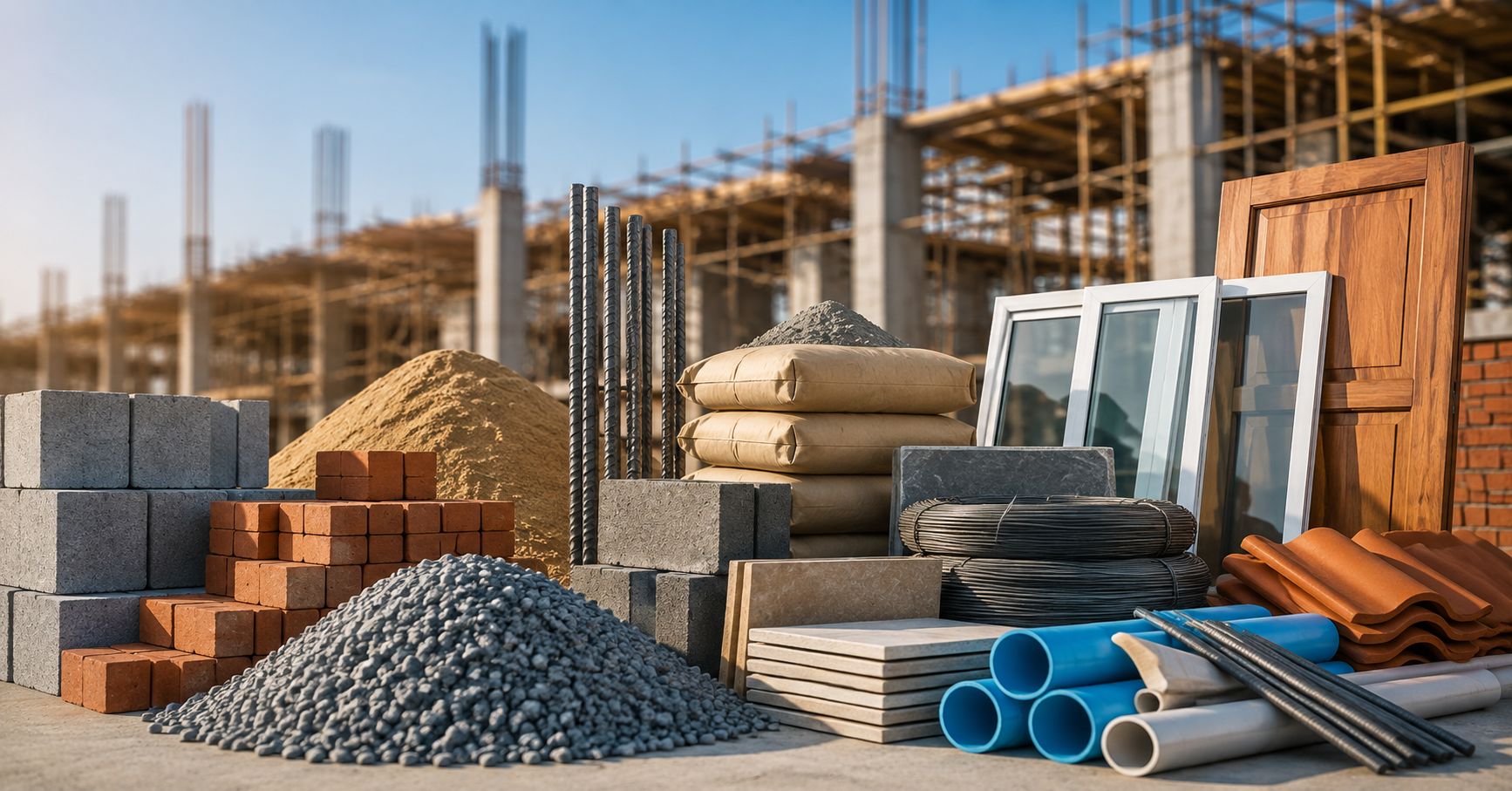
- Cement, steel, concrete, sand, aggregates, bricks, blocks, wood, glass, tiles, and paint all have different applications.
- Material selection should consider quality, climate, availability, maintenance, and budget.
- Construction material cost includes more than the purchase price; transportation, labour, installation, and wastage also matter.
- Proper planning can reduce unnecessary expenses without compromising construction quality.
- Professional guidance is valuable when selecting materials for structural work.
What Are Building Construction Materials?
Building construction materials are products used to construct, strengthen, protect, and finish buildings. They can be broadly divided into structural and non-structural materials.
Structural materials help provide strength and stability to a building. These include concrete, steel, bricks, blocks, cement, sand, and aggregates.
Non-structural materials are mainly used for finishing, appearance, insulation, and comfort. These include tiles, paint, glass, wood, doors, windows, and interior materials.
The quality and suitability of these materials directly affect the durability, safety, and maintenance requirements of a building.
Major Types of Building Construction Materials
1. Cement
Cement is one of the most commonly used construction materials. It acts as a binding material and is used in concrete, mortar, plaster, and other construction applications.
Cement quality is important because it contributes to the strength and durability of concrete and masonry work.
Common uses include:
- Concrete production
- Brick and block masonry
- Plastering
- Flooring work
- Foundation construction
2. Sand
Sand is another essential construction material. It is commonly mixed with cement and water to create mortar and is also used in concrete.
Good-quality sand should be suitable for the intended construction application and should be properly stored to prevent contamination.
Common uses include:
- Concrete
- Plastering
- Brickwork
- Blockwork
- Mortar
3. Aggregates
Aggregates are granular materials used mainly in concrete. They generally include fine aggregates such as sand and coarse aggregates such as crushed stone or gravel.
The size, cleanliness, and quality of aggregates can affect the performance of concrete.
4. Bricks
Bricks have traditionally been one of the most popular materials for wall construction. They are commonly used for external walls, internal walls, and partitions.
Advantages of bricks include:
- Good durability
- Easy availability
- Suitable for masonry
- Familiar construction method
However, brick quality, size, strength, and absorption should be considered before purchase.
5. AAC Blocks
AAC, or Autoclaved Aerated Concrete, blocks are lightweight building blocks used for walls and partitions.
They can reduce the dead load of a structure and are generally easier to handle than traditional masonry units.
When selecting AAC blocks, consider their density, strength, dimensions, quality, and suitability for the project.
6. Steel
Steel plays an important role in reinforced concrete construction. Steel reinforcement is commonly used in foundations, columns, beams, slabs, and other structural elements.
Steel provides tensile strength to reinforced concrete structures.
Because steel prices can change according to market conditions, accurate estimation and proper procurement are important for controlling construction costs.
7. Concrete
Concrete is a key material in modern construction. It is commonly made using cement, water, sand, and aggregates.
It is widely used for:
- Foundations
- Columns
- Beams
- Slabs
- Footings
- Structural structures
The appropriate concrete mix and quality control are important for achieving the required performance.
8. Wood
Wood can be used for doors, windows, furniture, flooring, roofing elements, and interior work.
The type of wood should be selected according to the application, durability requirements, appearance, and maintenance needs.
9. Glass
Glass is increasingly used in modern residential and commercial buildings. It can be used for windows, doors, partitions, facades, and interior designs.
Different applications may require different types of glass based on safety, insulation, privacy, and design requirements.
10. Tiles and Flooring Materials
Tiles are widely used for floors, kitchens, bathrooms, balconies, and walls.
Popular options include:
- Ceramic tiles
- Vitrified tiles
- Porcelain tiles
- Granite
- Marble
The right flooring material depends on factors such as location, foot traffic, maintenance, appearance, and budget.
11. Paint and Finishing Materials
Paint provides both appearance and protection to building surfaces. Interior and exterior surfaces may require different products.
A typical finishing system may include surface preparation, putty, primer, and paint.
For exterior walls, weather resistance and durability are especially important.
Building Materials and Their Uses
Different materials serve different purposes during construction.
| Material | Common Uses |
|---|---|
| Cement | Concrete, mortar, plaster |
| Sand | Concrete, mortar, plaster |
| Steel | Columns, beams, slabs, foundations |
| Bricks | Walls and partitions |
| AAC Blocks | Lightweight walls and partitions |
| Concrete | Foundations, slabs, beams, columns |
| Wood | Doors, windows, furniture, interiors |
| Glass | Windows, facades, partitions |
| Tiles | Floors and walls |
| Paint | Interior and exterior finishing |
A building normally requires a combination of these materials rather than relying on one material alone.
How to Choose the Right Construction Materials
Choosing construction materials should not be based only on their price. Several factors should be considered.
Structural Requirements
Structural materials must meet the requirements of the building design. Strength, durability, load-bearing capacity, and safety should be considered before selecting materials.
Local Climate
The climate of the construction location can influence material selection. Heat, rain, humidity, temperature changes, and moisture exposure can affect building performance.
Quality
Always check the quality and specifications of construction materials. Poor-quality materials can lead to premature damage, higher maintenance costs, and construction problems.
Availability
Locally available materials can make procurement easier and may reduce transportation expenses. Reliable supply is also important for avoiding project delays.
Maintenance
Consider the long-term maintenance requirements of a material rather than looking only at its initial purchase price.
Sustainability
Where practical, builders and homeowners can consider durable, energy-efficient, locally sourced, or recycled construction materials to reduce environmental impact.
Construction Material Cost: What Affects the Price?
Construction material cost can vary considerably depending on the project and location.
Some major factors include:
Material Quality and Grade
Higher-quality or specialized materials can have a higher initial price. The selected grade should match the technical requirements of the project.
Market Conditions
Prices of materials such as cement, steel, sand, and aggregates can change over time due to supply, demand, transportation, and other market conditions.
Transportation
The distance between the supplier and construction site can affect the final material cost. Loading, unloading, and delivery charges may also contribute to the total expense.
Quantity Required
Larger projects require greater quantities of materials. Accurate estimation can help reduce unnecessary purchases and shortages.
Labour and Installation
Some materials require skilled workers or specialized installation methods. Therefore, the total cost should include both material and installation expenses.
Material Wastage
Breakage, incorrect cutting, poor storage, and inaccurate estimation can increase material wastage and raise the overall construction budget.
How to Reduce Building Material Costs Without Compromising Quality
You do not always need to choose the cheapest product to reduce construction costs. Better planning can often provide greater savings.
Here are some practical steps:
- Prepare a detailed material estimate before purchasing.
- Compare quotations from reliable suppliers.
- Purchase materials according to the construction schedule.
- Avoid unnecessary over-ordering.
- Store materials properly.
- Monitor material usage at the construction site.
- Reduce breakage and wastage.
- Select materials according to their actual application.
- Consider long-term maintenance costs.
- Work with experienced construction professionals.
Proper planning can help control costs while maintaining the required quality and safety.
Common Mistakes When Choosing Construction Materials
Choosing Only on Price
The cheapest material may not always provide the best long-term value. Low-quality materials can increase repair and replacement costs.
Ignoring Quality
Construction materials should meet the requirements of the project. Quality should never be compromised for short-term savings, especially for structural components.
Poor Quantity Planning
Ordering too little can delay construction, while excessive purchasing can increase storage problems and wastage.
Ignoring Local Conditions
A material that works well in one environment may not be ideal for another. Climate and site conditions should be considered.
Improper Storage
Cement, steel, wood, tiles, and other materials can be damaged by improper storage. Materials should be protected until they are required on-site.
Building Construction Materials for Different Parts of a House
Foundation
Foundations commonly require concrete, cement, aggregates, sand, and steel reinforcement.
Walls
Walls can be constructed using bricks, AAC blocks, concrete blocks, and appropriate mortar.
Roof and Slabs
Concrete and steel reinforcement are commonly used for RCC slabs and structural roof elements. Waterproofing materials may also be required depending on the design.
Doors and Windows
Wood, aluminium, uPVC, and glass are common options for doors and windows.
Flooring
Tiles, marble, granite, and other flooring materials can be selected according to the room's purpose and design.
Interior and Exterior Finishing
Plaster, putty, primer, paint, tiles, and decorative materials are commonly used for finishing.
Traditional vs. Modern Building Materials
Traditional materials such as clay bricks remain widely used, while modern materials such as AAC blocks and advanced construction products are increasingly popular.
The right choice depends on the project rather than simply whether a material is traditional or modern.
Consider:
- Strength
- Weight
- Installation time
- Thermal performance
- Durability
- Availability
- Maintenance
- Overall cost
For example, lightweight blocks may provide advantages in handling and construction speed, while traditional bricks may be preferred for specific applications or based on local availability.
How to Estimate Construction Material Cost
A basic material cost estimation process can include the following steps:
- Start with the building plan.
- Identify the required materials.
- Estimate the quantity of each material.
- Determine the required grade and specifications.
- Collect quotations from suppliers.
- Add transportation and delivery costs.
- Account for expected wastage.
- Compare the total estimated cost with the available budget.
- Keep a contingency amount for unexpected price changes or requirements.
Actual construction material costs vary depending on the building size, location, design, specifications, supplier, market conditions, and construction method.
Conclusion
Choosing the right building construction materials is essential for creating a strong, safe, durable, and comfortable property. Look beyond the initial price and consider quality, performance, durability, maintenance, and long-term value.
With proper planning and expert guidance, RR INFRA helps you make smarter construction decisions while focusing on quality workmanship and reliable results. Planning your construction project? Contact RR INFRA today and take the first step toward building with confidence.