Introduction
Choosing the right construction approach starts with understanding how commercial and residential construction differ. Many property owners in Jaipur assume building a home and building an office follow the same process, but the reality is quite different. From design codes to material choices, timelines, and budgeting, residential construction and commercial construction demand distinct expertise. This guide breaks down everything you need to know before starting your next project, whether it's a family home or a business space.
Key Takeaways
- Residential construction prioritizes comfort and personalization; commercial construction prioritizes function and capacity.
- Commercial projects involve stricter zoning, fire safety, and accessibility regulations than residential builds.
- Material choices differ significantly due to load requirements and usage patterns.
- Commercial construction typically costs more per square foot and takes longer to complete.
- Hiring experienced residential building contractors or commercial specialists affects project success directly.
What Is Residential Construction?
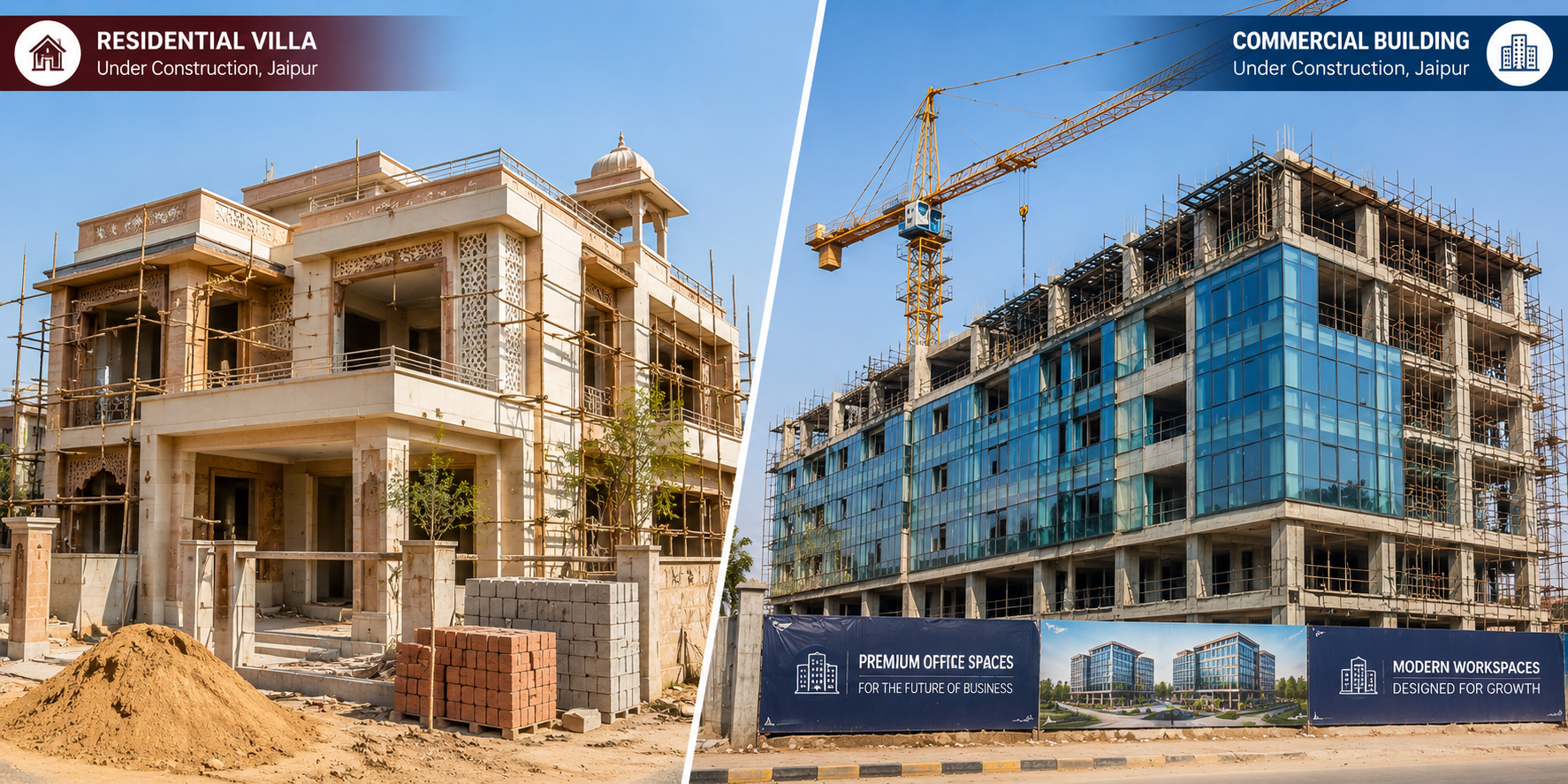
Residential construction refers to building structures meant for people to live in, such as independent houses, villas, apartments, and gated communities. The focus here is on creating spaces that feel personal, comfortable, and tailored to a family's lifestyle.
In our experience working across Jaipur's residential neighborhoods, clients usually care most about three things: layout efficiency, natural light, and long-term durability. Residential construction services typically include:
- Single-family homes
- Multi-story villas
- Apartment complexes
- Renovation and extension work
Unlike commercial projects, residential builds are designed around daily living patterns. Kitchen placement, bedroom privacy, ventilation, and outdoor spaces like balconies or courtyards become priority considerations during planning.
Why Residential Projects Need a Different Approach
A home isn't just a structure; it's where people spend most of their lives. This means residential building contractors must balance aesthetics with practicality, often working closely with the family to understand specific needs like vastu compliance, multi-generational living arrangements, or future expansion plans.
What Is Commercial Construction?
Commercial construction involves building structures intended for business use, including offices, retail outlets, hotels, warehouses, and industrial facilities. These projects operate under a completely different set of priorities compared to residential construction.
Commercial buildings need to accommodate higher foot traffic, complex electrical and HVAC systems, and often specialized equipment. A retail showroom, for instance, requires different structural planning than a corporate office or a manufacturing unit.
Common types of commercial construction include:
- Office buildings and business parks
- Retail showrooms and shopping complexes
- Hotels and hospitality projects
- Warehouses and industrial sheds
- Educational and healthcare facilities
The Functional Focus of Commercial Builds
Every commercial construction decision ties back to functionality and return on investment. Floor plans are designed for efficiency, traffic flow, and scalability rather than personal comfort alone. This is one of the biggest mindset shifts clients need to make when transitioning from a residential to a commercial project.
Design and Architectural Differences
Design philosophy is where residential construction and commercial construction diverge most visibly.
Residential Design Centers Around:
- Personalized layouts based on family size and lifestyle
- Privacy zoning between bedrooms, living areas, and common spaces
- Aesthetic choices reflecting personal taste
- Indoor-outdoor connectivity through balconies, gardens, or terraces
Commercial Design Centers Around:
- Open floor plans that support business operations
- Standardized layouts for scalability across locations
- Branding integration into architectural elements
- Traffic flow optimization for customers, employees, or visitors
A practical example: a residential living room might be designed around furniture arrangement and natural light for relaxation. A commercial reception area, on the other hand, is designed for visitor flow, brand visibility, and operational efficiency. The underlying engineering principles remain similar, but the design intent is fundamentally different.
Materials and Engineering Requirements
Material selection and structural engineering vary significantly between the two construction types, primarily due to load requirements and usage intensity.
Residential Construction Materials
- Standard reinforced concrete for low to mid-rise structures
- Brick or block masonry for walls
- Residential-grade electrical and plumbing systems
- Standard insulation and waterproofing solutions
Commercial Construction Materials
- Higher-grade structural steel or reinforced concrete for larger spans
- Industrial-grade electrical systems supporting heavier loads
- Advanced fire-resistant materials and sprinkler systems
- Specialized HVAC systems designed for large, open spaces
Load-bearing calculations differ substantially as well. A commercial building hosting hundreds of people daily needs structural engineering that accounts for higher occupancy loads, heavier equipment, and extended operational hours compared to a typical residential building.
Permits, Codes, and Compliance
This is one of the most overlooked yet critical differences between residential construction and commercial construction.
Residential projects generally require:
- Building plan approval from local municipal authorities
- Basic fire safety compliance (varies by building height)
- Standard structural stability certificates
- Completion and occupancy certificates
Commercial projects require significantly more regulatory oversight, including:
- Detailed fire safety and evacuation planning
- Accessibility compliance for differently-abled individuals
- Environmental clearances for larger projects
- Parking and traffic impact assessments
- Industry-specific licenses (for hospitality, healthcare, or industrial use)
Navigating these compliance requirements without experienced construction services can lead to costly delays. Commercial projects in Jaipur, particularly those near commercial corridors, often face longer approval timelines because of these layered regulatory checks.
Cost and Budget Differences
Budget planning differs considerably between residential and commercial construction, and understanding this upfront helps avoid financial surprises.
Residential construction costs are generally influenced by:
- Plot size and built-up area
- Material quality preferences
- Interior finishing choices
- Customization level
Commercial construction costs are influenced by:
- Structural complexity and span requirements
- Specialized systems (HVAC, fire safety, elevators)
- Compliance and licensing expenses
- Scale and phased construction needs
On average, commercial construction tends to cost more per square foot than residential construction due to the complexity of systems involved and stricter compliance standards. However, residential projects with extensive customization or premium finishes can sometimes approach similar cost ranges.
Comparison Table: Residential vs Commercial Construction
| Factor | Residential Construction | Commercial Construction |
|---|---|---|
| Primary Purpose | Living spaces for families | Business and operational spaces |
| Design Focus | Comfort, privacy, personalization | Functionality, traffic flow, branding |
| Typical Materials | Standard concrete, brick masonry | Reinforced steel, industrial-grade systems |
| Regulatory Complexity | Moderate | High |
| Average Timeline | Shorter (varies by size) | Longer due to compliance and scale |
| Cost per Square Foot | Generally lower | Generally higher |
| Occupancy Load | Low to moderate | Moderate to high |
| Decision Makers | Individual families | Businesses, developers, investors |
Checklist: Choosing the Right Construction Type
Use this checklist before starting your project:
- Define the primary purpose of the structure (living vs business use)
- Identify expected occupancy and usage intensity
- Check local zoning regulations for your plot
- Determine budget range based on project scale
- Assess timeline expectations and flexibility
- Evaluate whether specialized systems (HVAC, fire safety) are needed
- Shortlist contractors with proven experience in your specific construction type
- Request detailed compliance and permit guidance from your contractor
This checklist helps clients clarify priorities before approaching residential building contractors or commercial construction specialists, saving time during initial consultations.
Conclusion
Understanding the differences between residential construction and commercial construction helps you make informed decisions from day one, whether you're building a family home or a business space in Jaipur. Each construction type demands distinct expertise, from design philosophy and material selection to regulatory compliance and budget planning. Choosing a contractor who understands these nuances directly impacts the quality, timeline, and long-term value of your project.
If you're planning a residential or commercial construction project in Jaipur and want guidance rooted in real, on-ground experience, RR Infra Group is here to help. Our team brings hands-on expertise across both residential and commercial construction services, ensuring your project is handled with the right approach from planning to completion. Reach out to RR Infra Group today to discuss your construction needs and get a clear, practical roadmap forward.