A beautiful home is more than great design, it’s about what is built behind the walls. From the foundation and concrete to plumbing, electrical work, and waterproofing, every detail matters. A home construction checklist helps you spot issues early and protect your investment.
In this guide, you’ll learn the key quality checks to follow at every construction stage. With RR INFRA, homeowners can focus on proper planning, quality workmanship, and careful execution to build a home that is safe, durable, and built to last.
Key Takeaways
- A home construction checklist helps identify issues before they become costly repairs.
- Always inspect the foundation, reinforcement, concrete, and structural work carefully.
- Check plumbing, electrical work, and waterproofing before they are covered.
- Pay attention to flooring, plastering, doors, windows, and drainage during finishing.
- Keep important drawings, test reports, warranties, and construction photos safely.
- Conduct a complete final inspection before handover.
- Work with qualified professionals for structural, electrical, and other technical checks.
Why Is a Home Construction Checklist Important?
Many important construction elements are eventually hidden behind walls, floors, and ceilings. Once they are covered, finding and fixing problems can become difficult and expensive.
A construction checklist helps you:
- Identify mistakes early
- Check work against approved plans
- Monitor material and workmanship quality
- Reduce future repair costs
- Keep construction records
- Communicate clearly with your contractor
- Prepare for final handover
1. Check the Construction Plan Before Work Starts
Before construction begins, make sure the latest drawings and plans are available.
Review:
- Architectural and structural drawings
- Electrical and plumbing layouts
- Floor plans and elevations
- Building dimensions
- Door and window locations
Make sure the team follows the approved plans and properly documents any changes.
2. Inspect the Site and Foundation
The foundation supports the entire structure, so quality checks at this stage are essential.
Before excavation, check:
- Plot boundaries and building alignment
- Required setbacks
- Ground levels
- Foundation locations
- Excavation depth and width
- Soil conditions
Before concrete is poured, inspect reinforcement according to the structural drawings. Check bar diameter, spacing, lap locations, concrete cover, tying, and positioning.
Taking photographs before reinforcement is covered can also help maintain a useful construction record.
3. Check Concrete Quality
Concrete has a major role in the strength and durability of a home.
During concrete work, check:
- Specified concrete grade
- Proper mixing and batching
- Workability
- Correct placement
- Proper compaction
- Adequate curing
- No unnecessary addition of water
Poor compaction can cause defects such as honeycombing, while inadequate curing can affect concrete performance. Structural work should always follow the project specifications and professional engineering advice.
4. Inspect Columns, Beams, and Slabs
Before concrete placement, carefully inspect reinforced concrete elements.
Columns
Check dimensions, reinforcement, stirrup spacing, concrete cover, alignment, and connections.
Beams
Inspect dimensions, main reinforcement, stirrups, anchorage, and beam-column connections.
Slabs
Check slab thickness, reinforcement spacing and direction, concrete cover, electrical conduits, plumbing sleeves, openings, and formwork stability.
Once concrete is poured, many of these elements become difficult to inspect, so pre-pour checking is important.
5. Check Brickwork and Walls
For masonry work, make sure walls are:
- Straight and vertical
- Properly aligned
- Built to the required thickness
- Correctly positioned
Also inspect mortar joints and connections between masonry and structural elements.
Check door and window openings carefully to avoid installation problems later.
6. Inspect Plumbing Work
Plumbing problems can become expensive when pipes are hidden inside walls or floors.
Check:
- Pipe type and size
- Pipe routing
- Joint quality
- Drainage slopes
- Valves and inspection points
- Bathroom drainage
Test plumbing before closing walls and floors. Look for leaks, pressure loss, blockages, and poor drainage. Photograph concealed pipe routes for future reference.
7. Follow an Electrical Quality Checklist
Plan electrical points according to your actual needs.
Check locations for:
- Switches and sockets
- Lights and fans
- Air-conditioners
- Kitchen appliances
- Water heaters
- Internet and TV points
Also ensure that wiring, circuit protection, earthing, and the distribution board follow applicable electrical requirements.
Electrical systems should be properly tested by a qualified electrician before concealed work is completed.
8. Pay Special Attention to Waterproofing
Waterproofing is one area where prevention is far better than repair.
Bathroom Waterproofing
Check floor preparation, waterproofing application, pipe penetrations, corners, joints, drainage, and floor slope.
Terrace Waterproofing
Inspect surface preparation, waterproofing layers, drainage slopes, pipe penetrations, edges, and rainwater outlets.
Where specified, conduct an appropriate water or ponding test before covering the waterproofed area with finishing materials.
9. Check Flooring, Tiling, and Plastering
For flooring and tiles, inspect:
- Alignment
- Joint consistency
- Surface level
- Adhesion
- Grouting
- Floor slope
- Drainage
In bathrooms, water should flow properly toward the drain.
For plastering, check for cracks, hollow patches, uneven surfaces, poor corners, and visible service lines. Proper curing and surface preparation should be completed before painting.
10. Inspect Doors, Windows, and Painting
Check doors and windows for:
- Proper alignment
- Smooth opening and closing
- Working locks and handles
- Secure hinges
- Undamaged glass
- Proper seals
For painting, look for uneven color, peeling, cracks, patchy areas, visible brush or roller marks, and poor finishing around corners, frames, and ceilings.
11. Check External Drainage
External drainage is important for protecting the home from rainwater and dampness.
Inspect:
- Ground slopes
- Rainwater flow
- Drain locations
- Driveway levels
- External pipes
- Drain connections
Water should flow away from the building according to the site's drainage design.
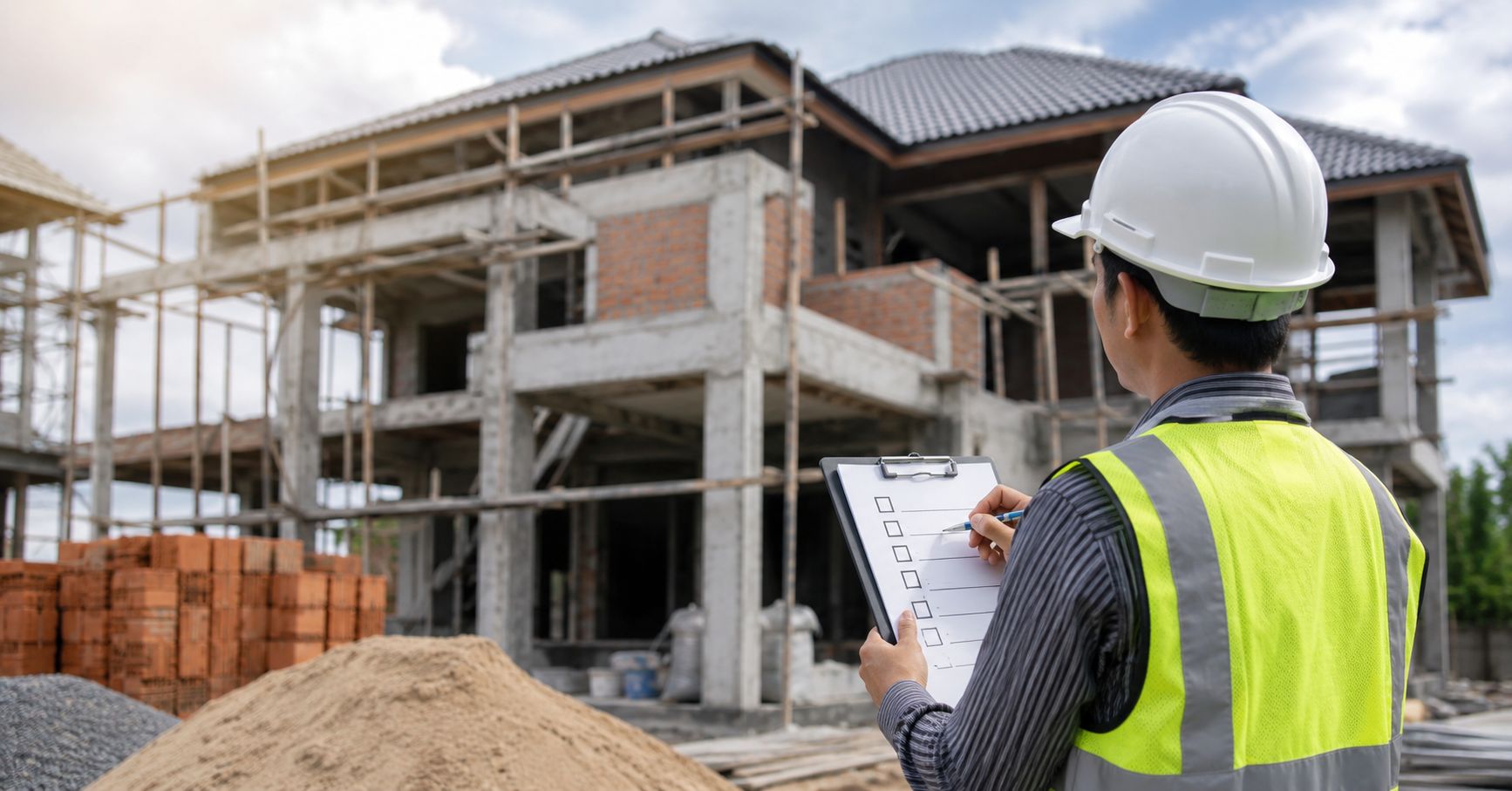
12. Keep a Construction Quality Checklist
Do not wait until the home is finished to inspect everything.
Create checkpoints for:
- Site preparation
- Foundation
- Reinforcement
- Concrete
- Masonry
- Plumbing
- Electrical
- Waterproofing
- Flooring
- Painting
- Doors and windows
- Final inspection
At each stage, record what was inspected, problems found, required corrections, completion dates, and photographs.
A structured quality-control approach is also where RR INFRA can help homeowners keep construction planning and execution organized, while professional inspections should be used wherever technical or structural judgment is required.
13. Keep Important Construction Documents
Maintain a dedicated folder containing:
- Approved drawings
- Structural plans
- Material specifications
- Invoices
- Test reports
- Waterproofing records
- Electrical and plumbing test records
- Product warranties
- Appliance manuals
- Construction photographs
These records can be useful for future maintenance, repairs, renovations, or resale.
14. Common Construction Problems to Watch For
Keep an eye out for:
- Cracks: Significant, growing, or unusual cracks should be professionally assessed.
- Dampness: Damp patches, peeling paint, or musty smells may indicate water problems.
- Honeycombing: Visible voids in concrete require proper professional assessment.
- Uneven floors: Unexpected slopes can affect flooring and drainage.
- Hollow tiles: Poorly bonded tiles may crack or detach.
- Plumbing leaks: Even small concealed leaks can cause major damage over time.
The earlier a problem is identified, the easier it is generally to address.
Final Home Construction Checklist Before Handover
Before moving in, complete one final inspection.
Structure & Finishes
- Check visible cracks
- Inspect walls and ceilings
- Check floors and plaster
- Inspect external finishes
Plumbing
- Test every tap and drain
- Check for leaks
- Check water pressure
- Test bathroom drainage
Electrical
- Test switches and sockets
- Test lights and fans
- Check circuit protection
- Verify earthing through appropriate testing
Bathrooms
- Check water flow and drainage
- Inspect fixtures
- Review waterproofing test results
Doors & Windows
- Test locks, handles, and hinges
- Check glass
- Test opening and closing
Documents
- Collect drawings
- Collect warranties and test reports
- Save construction photographs
- Record concealed service locations
Final Thoughts
A quality home is built through the right decisions at every stage. A home construction checklist helps you spot issues early, monitor workmanship, and protect your investment without needing to be a construction expert.
Planning your dream home? RR INFRA can help you focus on quality construction, careful execution, and attention to every important detail. Get in touch with RR INFRA today and take the first step toward building a safe, durable, and well-built home.