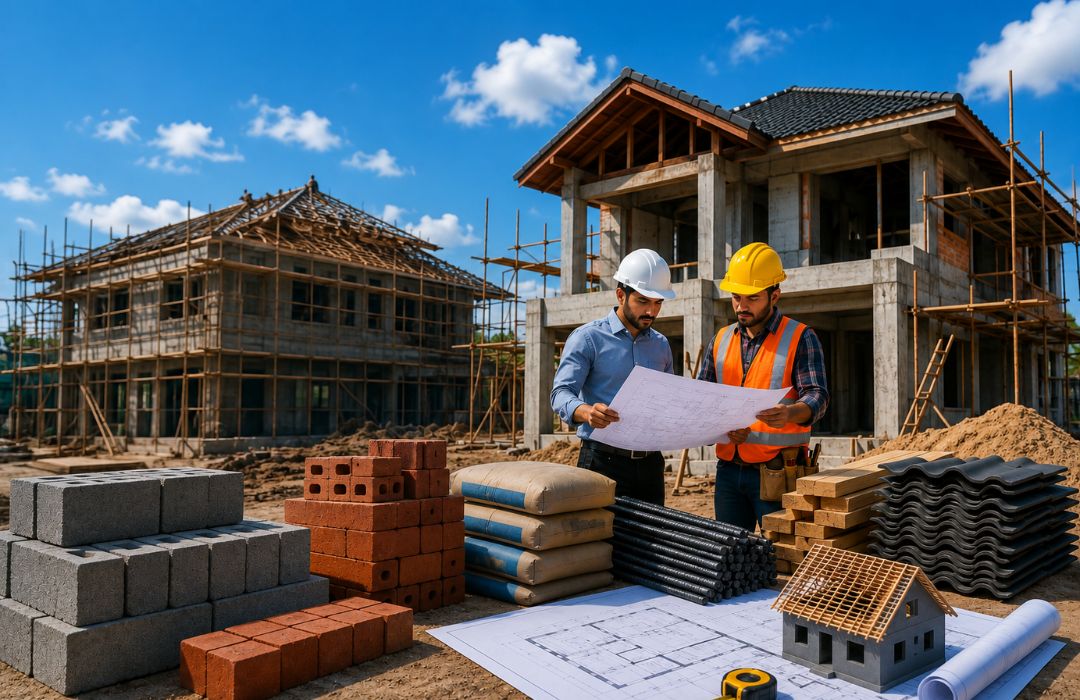
A strong and durable home begins with choosing the right construction materials. The materials you use affect everything from your home's safety and structural strength to its energy efficiency, maintenance needs, and long-term value. Making the right choice today can help you avoid costly repairs in the future.
In this guide, you'll learn how to choose the best construction materials for different parts of your home, the key factors to consider before buying, and common mistakes to avoid. At RR Infra Group, we help homeowners make informed construction decisions by recommending high-quality materials that match their budget, location, and long-term goals.
Key Takeaways
- Choose construction materials based on your climate, budget, and home design.
- Invest in quality materials for better durability, safety, and long-term savings.
- Select the right materials for each part of your home, from the foundation to the roof.
- Check material quality and certifications before purchasing.
- Work with trusted experts like RR Infra Group to build a strong and lasting home.
Why Construction Materials Matter in Home Building
The quality of your construction materials determines how well your home performs over the years. Good materials provide better structural strength, improve energy efficiency, and increase the resale value of your property.
Here are some of the biggest benefits of choosing quality materials:
- Stronger and safer structure
- Longer building lifespan
- Lower maintenance costs
- Better resistance to weather
- Improved energy efficiency
- Higher property value
- Greater comfort for your family
Although premium materials may cost more initially, they often reduce repair and replacement expenses over time.
Understand Your Home's Requirements Before Choosing Materials
Before purchasing any materials, evaluate your home's specific needs.
Consider Your Local Climate
Different climates require different building materials.
- Hot climates: Use insulated walls and reflective roofing.
- Humid regions: Choose moisture-resistant materials.
- Coastal areas: Select corrosion-resistant steel and waterproof finishes.
- Cold climates: Prioritize insulated walls and energy-efficient windows.
- Rainy regions: Invest in waterproof roofing and proper drainage systems.
Choosing materials suitable for your environment increases durability and reduces maintenance.
Set a Realistic Budget
Your budget should include both the purchase cost and future maintenance expenses.
Instead of focusing only on the lowest price, compare:
- Material lifespan
- Repair costs
- Maintenance requirements
- Energy savings
Paying a little more today can save thousands in future repairs.
Match Your Home Design
The style of your house also influences material selection.
Modern homes often feature concrete, steel, and glass, while traditional homes commonly use brick, stone, and wood. Eco-friendly homes may include bamboo, recycled steel, and sustainable building products.
Types of Construction Materials
Understanding the types of construction materials helps you make informed decisions.
Concrete
Concrete is one of the most widely used materials for foundations, beams, columns, and slabs.
Advantages
- High strength
- Fire resistant
- Long lifespan
- Low maintenance
Best for: Foundations and structural elements.
Bricks
Bricks remain one of the most popular wall materials.
Common options include:
- Clay bricks
- Fly ash bricks
- AAC blocks
AAC blocks are lightweight, energy-efficient, and provide excellent insulation.
Cement
Cement binds concrete and mortar together.
Popular choices include:
- OPC (Ordinary Portland Cement)
- PPC (Portland Pozzolana Cement)
Always buy fresh cement from trusted manufacturers.
Steel
Steel provides reinforcement for concrete structures.
Benefits include:
- High tensile strength
- Earthquake resistance
- Long durability
Choose certified TMT bars for residential construction.
Wood
Wood is commonly used for doors, windows, furniture, and flooring.
It offers:
- Natural beauty
- Excellent insulation
- Easy customization
Proper treatment protects wood from termites and moisture.
Stone
Natural stone adds beauty and durability.
Popular choices include:
- Granite
- Marble
- Sandstone
Stone is ideal for flooring, countertops, and exterior cladding.
Glass
Modern homes use glass for natural lighting and aesthetics.
Options include:
- Tempered glass
- Laminated glass
- Double-glazed glass
Energy-efficient glass also helps reduce electricity bills.
Roofing Materials
Common roofing choices include:
- Concrete tiles
- Clay tiles
- Metal roofing
- Asphalt shingles
Choose roofing materials based on your climate and maintenance preferences.
Best Construction Materials for Different Parts of Your Home
Selecting the best construction materials depends on each area of the house.
Foundation
The foundation carries the entire structure.
Recommended materials:
- Reinforced concrete
- High-quality cement
- Certified steel bars
Walls
Good wall materials improve insulation and durability.
Recommended options:
- Clay bricks
- AAC blocks
- Concrete blocks
Flooring
Popular flooring materials include:
- Granite
- Marble
- Vitrified tiles
- Engineered wood
Choose based on durability, budget, and maintenance.
Roof
A durable roof protects your home from weather damage.
Popular materials:
- Concrete roofing
- Metal roofing
- Clay tiles
Doors and Windows
Common choices include:
- Solid wood
- UPVC
- Aluminum
UPVC windows provide excellent insulation and require minimal maintenance.
Kitchen
Durable kitchen materials include:
- Granite countertops
- Quartz countertops
- Stainless steel fittings
These materials resist stains, heat, and moisture.
Bathroom
Choose waterproof and slip-resistant materials.
Recommended options:
- Ceramic tiles
- Anti-skid flooring
- Waterproof wall finishes
Factors to Consider When Choosing Building Materials for Home
When selecting building materials for home, evaluate these important factors.
Durability
Materials should withstand weather, moisture, and daily wear.
Strength
Structural materials must support the building safely.
Cost
Compare long-term value instead of only initial price.
Maintenance
Choose materials that require minimal upkeep.
Energy Efficiency
Good insulation reduces heating and cooling costs.
Fire Resistance
Fire-resistant materials improve home safety.
Water Resistance
Moisture-resistant materials prevent mold and structural damage.
Sustainability
Eco-friendly materials reduce environmental impact.
Availability
Locally available materials often reduce transportation costs.
Sustainable Home Construction Materials
Many homeowners now prefer environmentally friendly options.
Popular sustainable materials include:
- Bamboo
- Recycled steel
- Fly ash bricks
- Reclaimed wood
- Rammed earth
- Cork
These materials reduce carbon emissions while improving energy efficiency.
At RR Infra Group , sustainable construction is becoming an increasingly important consideration for homeowners looking to build durable and environmentally responsible homes.
Common Mistakes to Avoid
Avoid these common errors when selecting construction materials:
- Choosing the cheapest products
- Ignoring local weather conditions
- Buying from unreliable suppliers
- Overlooking maintenance costs
- Ignoring quality certifications
- Mixing incompatible materials
- Focusing only on appearance
Making informed decisions today prevents costly repairs later.
Tips to Save Money Without Compromising Quality
You don't always need the most expensive materials to build a durable home.
Here are some practical tips:
- Compare prices from multiple suppliers.
- Buy in bulk when possible.
- Use locally available materials.
- Invest in high-quality structural materials.
- Avoid unnecessary luxury finishes.
- Plan purchases carefully to reduce waste.
How to Check the Quality of Construction Materials
Always inspect materials before purchasing.
Cement
- Fresh manufacturing date
- No lumps
- Proper sealed packaging
Steel
- ISI certification
- Rust-free surface
- Correct grade
Bricks
- Uniform size
- Sharp edges
- Clear ringing sound when struck
Sand
- Clean and free from impurities
- Low silt content
- Proper grain size
Aggregates
- Clean
- Strong
- Uniform size
Quality checks ensure better construction and longer building life.
Conclusion
Choosing the right construction materials is essential for building a home that is safe, durable, comfortable, and cost-effective. By understanding the types of construction materials, comparing the best construction materials for each part of your home, and carefully selecting building materials for home based on climate, quality, and budget, you can make informed decisions that provide lasting value.
Whether you're planning a new build or renovating an existing property, investing in certified, high-quality materials will always pay off in the long run. At RR Infra Group , we believe that a strong home starts with smart material choices, helping homeowners build spaces that remain beautiful, reliable, and efficient for generations.