Imagine investing your hard-earned money in a new home, only to discover cracks in the walls, leaking ceilings, or uneven floors a few months later. Poor construction quality can lead to costly repairs, safety risks, and a significant drop in your property's value. Knowing the early warning signs can help you avoid these issues before they become major problems.
In this guide, you'll discover the most common signs of poor construction quality, what causes them, and the key areas to inspect before buying or building a property. At RR Infra Group, quality and transparency are at the heart of every project, with a strong focus on durable construction, premium materials, and strict quality checks to help homeowners invest with confidence.
Key Takeaways:
- Cracks, damp walls, uneven floors, and poor finishing are early signs of construction issues.
- Quality materials and regular inspections prevent costly repairs.
- Professional checks help identify hidden defects before investment.
- A trusted builder ensures safety, durability, and long-term value.
What Is Poor Construction Quality?
Poor construction quality refers to buildings that fail to meet acceptable standards for workmanship, materials, structural integrity, or safety. These issues can affect both newly built and older properties.
Common causes include:
- Low-quality building materials
- Poor workmanship
- Lack of site supervision
- Rushed construction schedules
- Ignoring building codes
- Inadequate quality inspections
Identifying these problems early can save thousands in future repair costs.
Why Construction Quality Matters
High-quality construction offers several long-term benefits:
- Better structural safety
- Lower maintenance costs
- Higher property value
- Improved energy efficiency
- Longer building lifespan
- Greater peace of mind
Ignoring construction defects can lead to expensive repairs and serious safety concerns over time.
1. Large Cracks in Walls
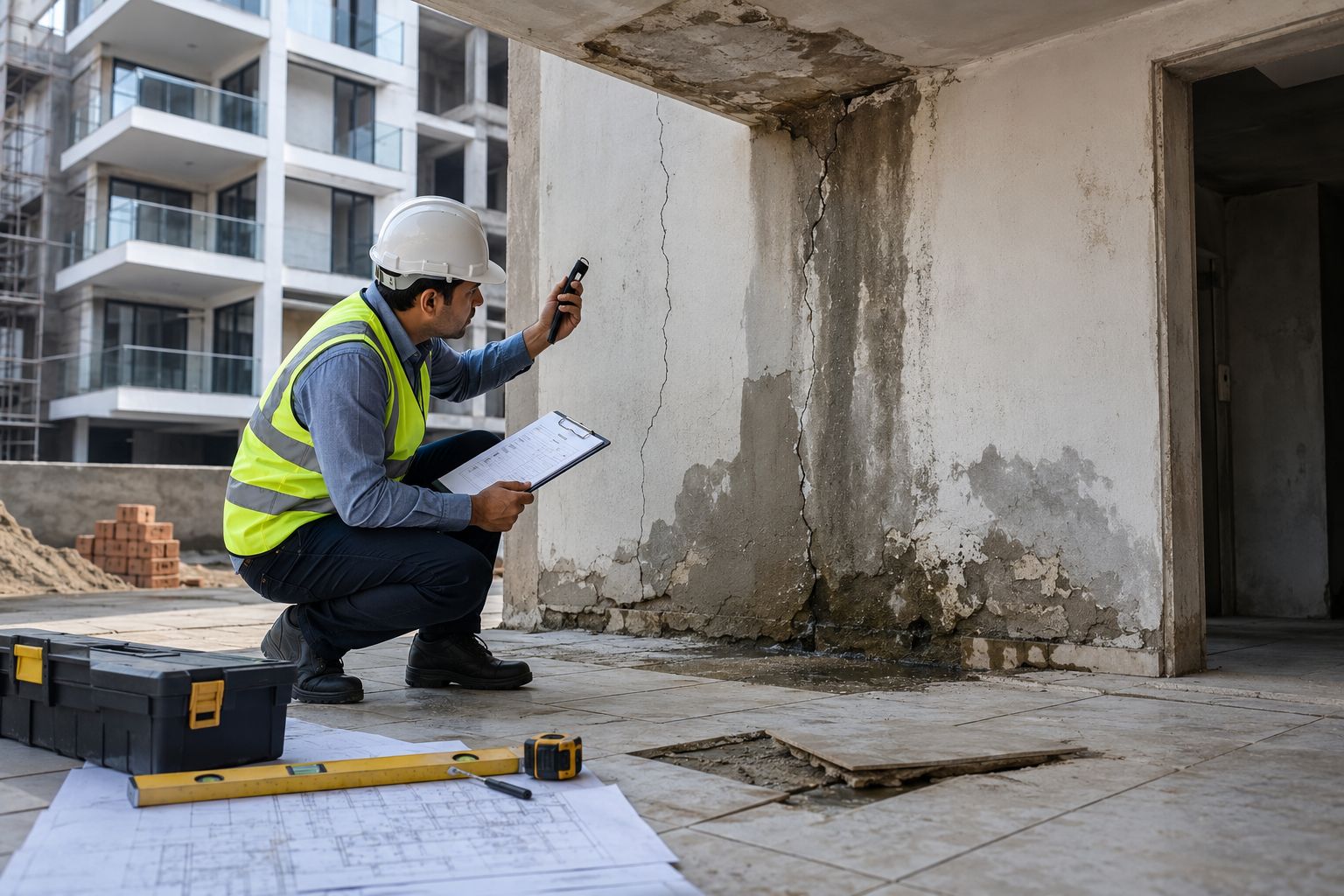
Not every crack is dangerous, but large horizontal, diagonal, or stair-step cracks may indicate structural movement or foundation problems.
Warning Signs
- Wide cracks that continue to grow
- Cracks near doors and windows
- Horizontal foundation cracks
These should always be inspected by a structural expert.
2. Uneven or Sloping Floors
Floors should remain level throughout the property.
If you notice:
- Furniture tilting
- Rolling objects
- Uneven walking surfaces
it may indicate foundation settlement or structural issues.
3. Doors and Windows That Don't Close Properly
Doors and windows should open and close smoothly.
Difficulty operating them could be caused by:
- Foundation movement
- Warped frames
- Poor installation
- Structural shifting
4. Damp Walls and Water Leakage
Water damage is one of the most common construction defects.
Look for:
- Damp patches
- Peeling paint
- Mold growth
- Musty smells
- Ceiling stains
Ignoring moisture problems can weaken structural components and affect indoor air quality.
5. Hollow or Loose Floor Tiles
Tap gently on floor tiles.
A hollow sound often means:
- Poor adhesive application
- Air gaps beneath tiles
- Improper installation
Loose tiles usually require replacement before further damage occurs.
6. Poor Paint Finish
A quality paint job should appear smooth and consistent.
Watch for:
- Bubbling
- Peeling
- Uneven color
- Blistering
- Cracking
These may indicate moisture issues or poor surface preparation.
7. Plumbing Problems
Faulty plumbing can become expensive if ignored.
Common signs include:
- Low water pressure
- Pipe leaks
- Slow drainage
- Rust-colored water
- Water stains under sinks
Regular inspections help detect hidden plumbing issues early.
8. Electrical Defects
Electrical problems are both inconvenient and dangerous.
Warning signs include:
- Flickering lights
- Frequent breaker trips
- Loose switches
- Sparking outlets
- Burning smells
Always have electrical issues inspected by licensed professionals.
9. Roof Problems
The roof protects the entire building.
Check for:
- Missing roofing materials
- Water leaks
- Sagging roof sections
- Poor drainage
- Cracked waterproofing
Early repairs can prevent extensive interior damage.
10. Foundation Problems
Foundation defects affect the entire structure.
Signs include:
- Large wall cracks
- Uneven floors
- Doors sticking
- Gaps around windows
- Basement moisture
Professional assessment is essential if these signs appear.
11. Uneven Wall Finishing
Poor plastering often indicates rushed workmanship.
Look for:
- Wavy walls
- Rough surfaces
- Visible patchwork
- Uneven corners
Although cosmetic, these defects often reveal poor construction practices.
12. Rusting Reinforcement
Exposed steel reinforcement is a serious warning sign.
It may lead to:
- Concrete cracking
- Structural weakening
- Corrosion
- Reduced building lifespan
Immediate repair is recommended.
13. Low-Quality Concrete
Poor concrete quality reduces structural strength.
Common symptoms include:
- Surface dusting
- Honeycombing
- Crumbling edges
- Deep cracks
Quality concrete should remain dense and durable for decades.
14. Poor Waterproofing
Bathrooms, terraces, balconies, and basements require proper waterproofing.
Signs of failure include:
- Persistent dampness
- Water seepage
- Mold formation
- Paint damage
Good waterproofing prevents long-term structural deterioration.
15. Improper Drainage
Water should always flow away from the building.
Poor drainage may cause:
- Foundation erosion
- Water pooling
- Landscape damage
- Basement flooding
Proper site grading is essential.
Why Professional Quality Checks Matter
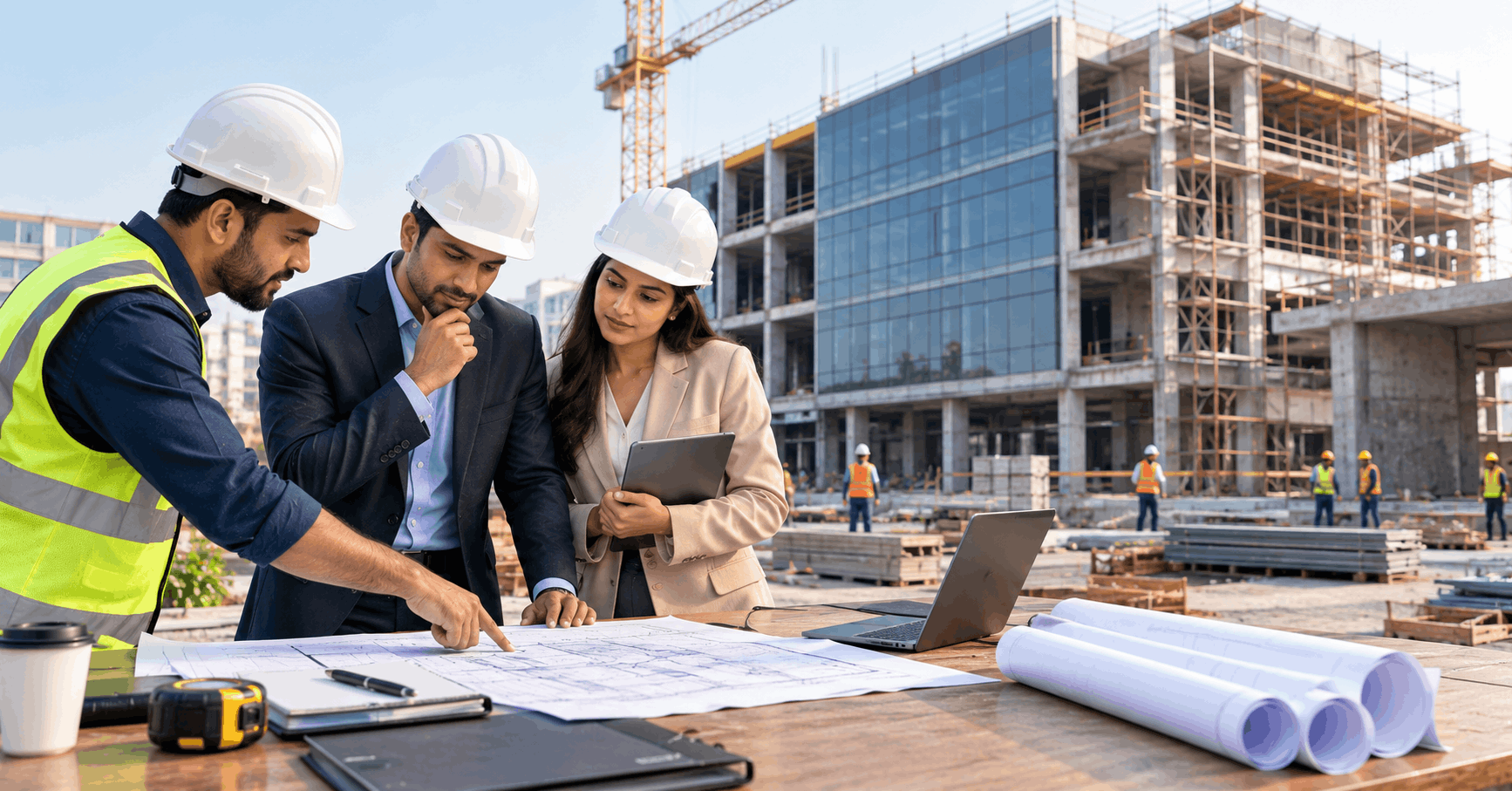
Even experienced buyers can miss hidden construction defects. Professional inspections evaluate structural stability, plumbing, electrical systems, waterproofing, and finishing before issues become costly.
Builders committed to quality assurance, such as RR Infra Group, typically follow systematic inspections, engineering standards, and strict quality control throughout every construction stage. This proactive approach helps minimize defects and delivers safer, more durable buildings.
Simple Construction Quality Inspection Checklist
Before buying a property, inspect the following:
- Foundation for cracks
- Roof for leaks
- Walls for dampness
- Floors for levelness
- Doors and windows for smooth operation
- Plumbing for leaks
- Electrical switches and outlets
- Waterproofing in bathrooms and terraces
- Tile installation quality
- Ceiling for stains or sagging
Taking this checklist during a site visit can help identify visible defects early.
How to Prevent Construction Quality Problems
You can reduce construction risks by following these best practices:
- Hire experienced contractors.
- Use certified construction materials.
- Conduct inspections at every construction stage.
- Follow local building codes.
- Keep proper construction records.
- Never compromise on structural quality to reduce costs.
Investing in quality today saves significant repair expenses in the future.
Final Thoughts
Poor construction quality often starts with small warning signs like cracks, damp walls, uneven floors, plumbing issues, and poor finishing. Ignoring these early signs can lead to costly repairs and serious safety risks. Regular inspections and timely action can protect both your investment and your family's well-being.
Planning to build or invest? Choose a trusted construction partner like RR Infra Group for quality, safety, and lasting durability. Build with confidence, contact RR Infra Group today and lay the foundation for a stronger tomorrow.