Every construction project has a different purpose. While some focus on developing roads, bridges and other infrastructure, others involve building homes, offices and commercial spaces. Each requires different planning, engineering and construction methods.
Understanding civil construction vs building construction helps you identify how these two areas differ in their purpose, scope and execution. Knowing these differences also helps in selecting the right approach for different project requirements. Let's explore their key differences and understand where each type of construction is used.
Key Takeaways
- Civil construction mainly focuses on infrastructure development.
- Building construction focuses on residential, commercial and industrial structures.
- Both require proper planning, engineering knowledge and quality materials.
- Civil and building construction often work together in large development projects.
- Choosing experienced professionals helps improve construction quality and project management.
What Is Civil Construction?
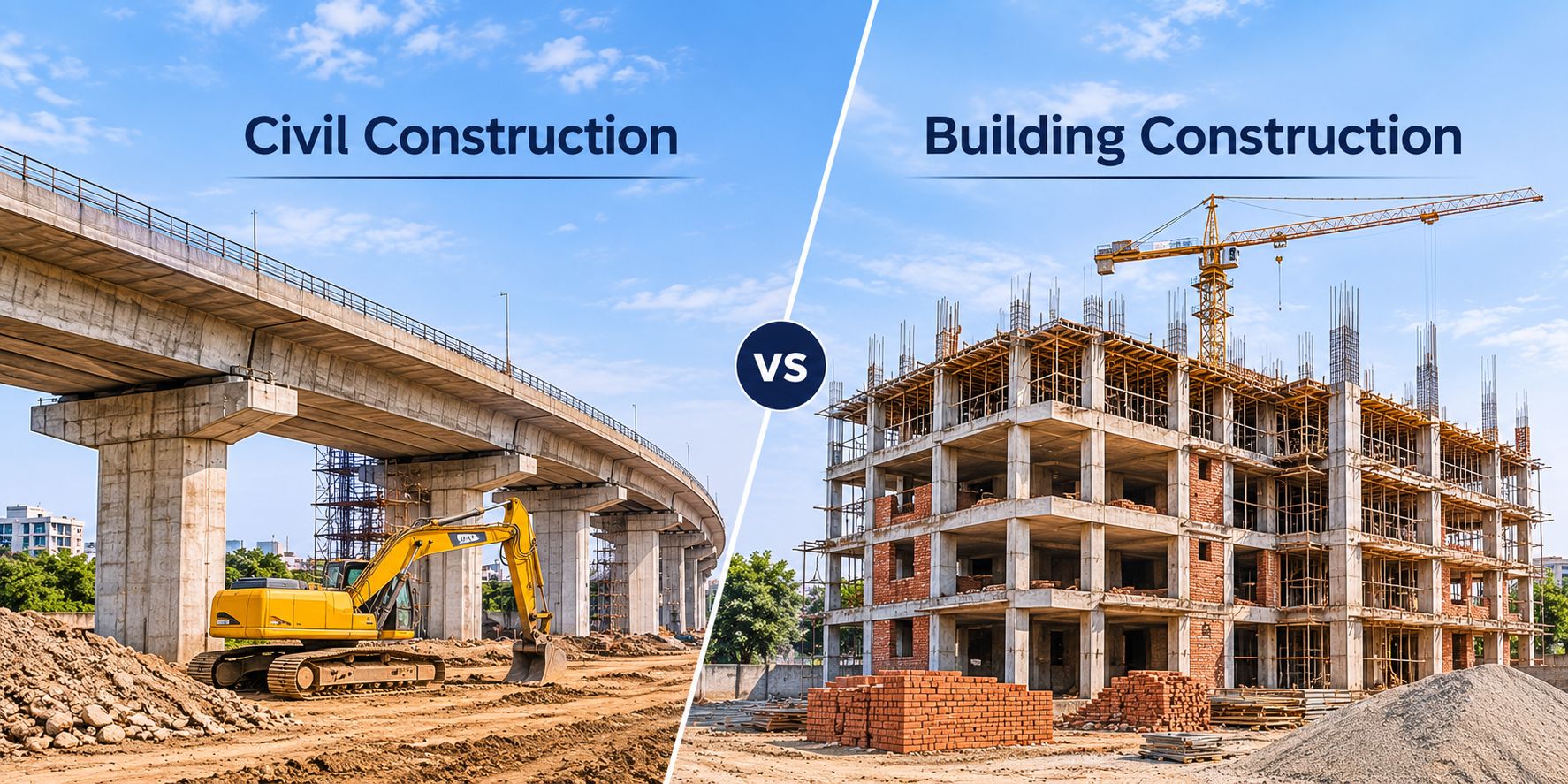
Civil construction refers to the development of infrastructure that supports everyday life and economic activities. It includes large-scale projects such as roads, bridges, highways, dams, drainage systems, airports and water supply networks.
The main purpose of civil construction is to develop strong, safe and long-lasting infrastructure for public and private use.
These projects usually require detailed planning, engineering knowledge, land assessment and coordination between different teams. Civil engineers, architects, contractors and construction workers work together to complete these projects.
Examples of civil construction include:
- Road and highway construction
- Bridge and flyover development
- Dams and water supply systems
- Railway and airport infrastructure
- Drainage and sewage systems
- Industrial infrastructure
Civil construction plays an important role in improving transportation, connectivity and overall infrastructure development.
What Is Building Construction?
Building construction refers to the process of planning, designing and constructing physical structures for residential, commercial, industrial or institutional purposes.
It focuses on creating spaces where people can live, work, study, shop or carry out different activities.
Building construction involves several stages, including site preparation, foundation work, structural development, roofing, electrical installation, plumbing, flooring and finishing.
The main goal is to create a building that is safe, functional, comfortable and suitable for its intended use.
Examples of building construction include:
- Residential houses and apartments
- Commercial offices and shopping complexes
- Schools and educational institutions
- Hospitals and healthcare buildings
- Factories and warehouses
- Hotels and residential complexes
Building construction requires proper material selection, skilled labour and quality management to ensure the structure remains safe and durable.
Civil Construction vs Building Construction: Key Differences
Civil construction and building construction are closely related, but their objectives and project requirements are different.
Here are the major differences between them:
| Basis | Civil Construction | Building Construction |
|---|---|---|
| Meaning | Development of infrastructure projects | Construction of residential and commercial structures |
| Main Purpose | Improve infrastructure and connectivity | Create usable spaces for living and working |
| Project Scope | Roads, bridges, dams and public infrastructure | Houses, apartments, offices and factories |
| Design | Focuses on engineering, land and infrastructure requirements | Focuses on building layout, space and functionality |
| Materials | Concrete, steel, asphalt and other infrastructure materials | Cement, bricks, steel, glass and finishing materials |
| Planning | Often involves large-scale planning and public requirements | Focuses on site planning, building design and user needs |
| Project Duration | Can take several months or years | Depends on the size and complexity of the building |
| Key Professionals | Civil engineers, infrastructure planners and contractors | Architects, structural engineers and building contractors |
In simple terms: Civil construction focuses on developing infrastructure, while building construction focuses on creating structures for specific uses.
Major Types of Building Construction
Building construction can be divided into different categories depending on the purpose of the structure.
- Residential Construction: Includes individual houses, villas, apartments and residential complexes designed for comfortable living.
- Commercial Construction: Includes offices, shopping malls, hotels and business centres.
- Industrial Construction: Includes factories, manufacturing units and warehouses.
- Institutional Construction: Includes schools, colleges, hospitals and government buildings.
Each type requires different designs, materials and construction planning to meet its specific requirements.
How Are Civil and Building Construction Connected?
Civil construction and building construction often work together on the same development project.
For example, when developing a residential township, civil construction may include land development, internal roads, drainage systems, water supply and utility connections. Building construction focuses on developing houses, apartments, clubhouses and other structures within the township.
Both are important for completing a successful project. Proper coordination between civil engineers, architects and contractors helps maintain construction quality, control costs and avoid unnecessary delays.
Which Type of Construction Is Right for Your Project?
The right construction approach depends on your project requirements.
- For residential projects: Building construction is required to develop houses, villas and apartments.
- For commercial projects: Building construction helps create offices, malls, hotels and other business spaces.
- For infrastructure development: Civil construction is suitable for roads, bridges, drainage and public infrastructure.
- For large property developments: Both types of construction may be required to develop buildings along with supporting infrastructure.
Before starting any project, it is important to understand the requirements, prepare a proper budget and work with experienced construction professionals.
Conclusion
Civil construction and building construction are two important parts of the construction industry. While civil construction develops the infrastructure needed for communities and businesses, building construction creates spaces for living, working and other activities.
Understanding their differences helps property owners, developers and businesses plan projects more effectively. With proper planning, quality materials and skilled professionals, both types of construction can deliver safe, durable and functional results.