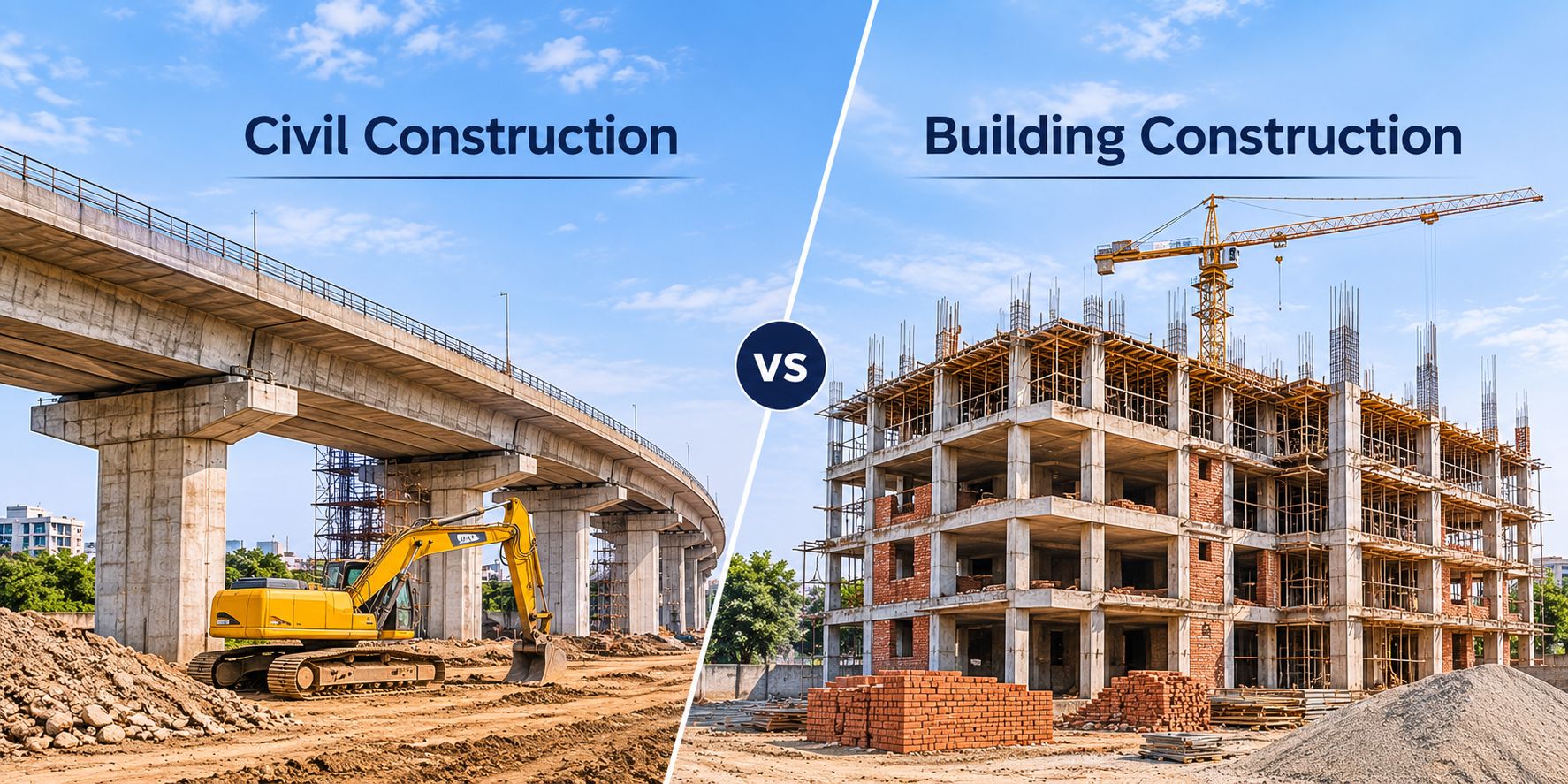
Construction projects often face challenges like long timelines, labour management and material waste. To overcome these issues, modern building methods are making construction faster and more efficient. One such method is modular construction, which is changing how buildings are designed and developed.
Instead of completing every activity on-site, modular construction uses factory-made building sections that are transported and assembled at the project location. This approach helps improve quality, save time and make project management easier across residential, commercial and industrial buildings.
Key Takeaways
- Modular construction involves factory manufacturing and on-site assembly.
- It can reduce overall construction time.
- Factory production supports better quality control.
- Planned manufacturing helps minimise material waste.
- It is suitable for residential, commercial, healthcare and industrial buildings.
- Proper design, transportation and installation planning are essential.
What Is Modular Construction?
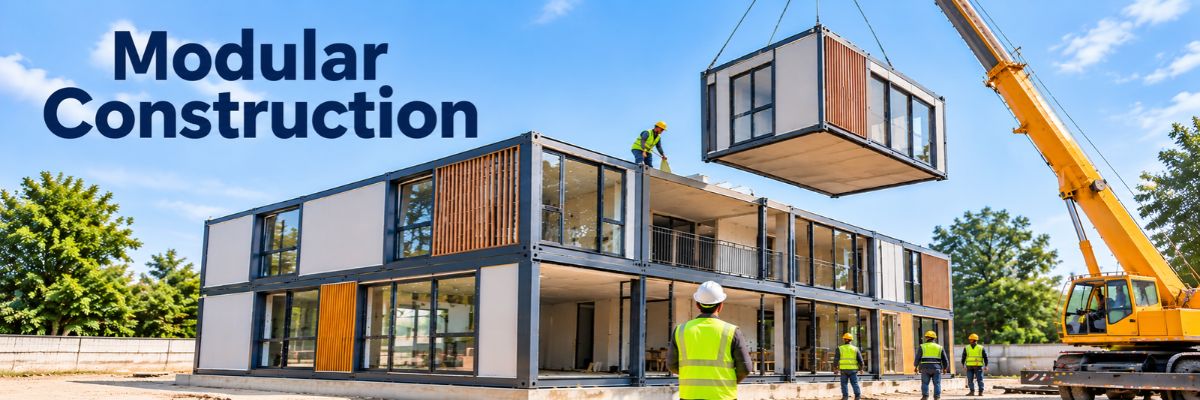
Modular construction is a modern building method in which different sections of a building, known as modules, are manufactured separately in a factory. These modules are then transported to the project location and assembled to create a complete structure.
Each module is designed according to the building plan and can include walls, flooring, ceilings, electrical fittings and plumbing systems.
Unlike traditional construction, where most activities take place at the site, modular construction allows factory production and site preparation to happen simultaneously. This makes the overall construction process more efficient.
Key Benefits of Modular Construction
Modular construction offers several advantages over conventional building methods. Some of its major benefits include:
1. Faster Construction Time
One of the biggest advantages is faster project completion. Building modules are manufactured in factories while foundation work and site preparation continue simultaneously. This reduces waiting time and helps complete projects more quickly.
2. Better Quality Control
Factory production allows workers to follow standard procedures and maintain consistent quality. Materials, measurements and finishing can be checked at different stages, helping reduce construction errors.
3. Reduced Material Waste
Modular construction uses planned measurements and controlled material cutting. This helps reduce unnecessary material consumption and construction waste. It can also support more sustainable building practices.
4. Cost Efficiency
Better material management, reduced labour requirements at the site and shorter project timelines can help control overall costs. However, the final cost depends on design, transportation, factory facilities and project size.
5. Improved Site Safety
Since a large part of the work takes place inside factories, fewer construction activities are required at the project site. This can reduce exposure to weather conditions, site hazards and certain workplace risks.
6. Better Project Planning
Modular construction follows a planned manufacturing and installation schedule. This makes it easier to manage materials, labour, equipment and project deadlines.
Step-by-Step Process of Modular Construction
Modular construction involves several stages, from initial planning to final installation. Each stage needs proper coordination to achieve the desired results.
Step 1: Planning and Design
The process begins with understanding project requirements, selecting the building layout and preparing architectural and structural designs. Engineers decide the size, shape and number of modules according to the project.
Step 2: Factory Manufacturing
Once the design is approved, individual modules are manufactured in a factory. Walls, floors, ceilings and other building components are prepared according to the approved specifications.
Step 3: Site Preparation
While the modules are being manufactured, workers prepare the construction site. This includes foundation work, ground preparation and arrangements for utility connections.
Step 4: Transportation of Modules
After manufacturing and quality checks, the modules are transported to the project location using suitable vehicles. Proper transportation planning is important to prevent damage during delivery.
Step 5: Module Installation
The modules are lifted using cranes or other suitable equipment and placed in their designated positions. Workers connect the modules to create the complete building structure.
Step 6: Final Inspection and Finishing
The final stage includes checking structural connections, electrical systems, plumbing, safety requirements and finishing work. After the required inspections and approvals, the building is ready for use.
Common Applications of Modular Construction
Modular construction is suitable for different types of projects where faster delivery, organised production and consistent quality are important.
1. Residential Buildings
Modular construction can make residential projects more organised by allowing different building components to be prepared before on-site installation. For anyone planning a home, understanding the construction stages is equally important. Our Home Construction Checklist can help you prepare for the key steps involved in building a house.
2. Commercial Buildings
Offices, retail spaces, hotels and commercial facilities can use modular construction to reduce on-site work and speed up project delivery.
3. Healthcare Facilities
Hospitals, clinics, medical centres and healthcare units can benefit from modular construction, especially when additional space is required within a limited timeframe.
4. Educational Institutions
Schools, colleges, hostels and student accommodation facilities can use modular building systems to create functional spaces with organised construction schedules.
5. Industrial Buildings
Factories, site offices, worker accommodation and industrial support facilities can also be developed using modular construction techniques.
Modular Construction vs Traditional Construction
Both construction methods have their own advantages. The main difference is where and how the building work is completed.
| Factor | Modular Construction | Traditional Construction |
|---|---|---|
| Work location | Mostly factory-based | Mostly on-site |
| Construction time | Generally faster | Generally longer |
| Quality control | Controlled factory environment | Managed at the site |
| Material waste | Often lower | Can be higher |
| Weather impact | Lower during manufacturing | Can affect site activities |
| Design planning | Requires early planning | More flexibility during execution |
The right method depends on project requirements, budget, design complexity and available resources.
Challenges to Consider Before Choosing Modular Construction
Although modular construction offers several benefits, it also has certain limitations.
- Transportation challenges: Large modules require suitable vehicles, roads and lifting equipment.
- Initial investment: Factory setup, specialised equipment and manufacturing arrangements can require significant investment.
- Design limitations: Changes after manufacturing begins can be difficult and expensive.
- Technical coordination: Structural connections, plumbing and electrical systems require accurate planning.
- Site requirements: The construction location must support module delivery, crane movement and installation activities.
Therefore, proper planning and coordination between architects, engineers, manufacturers and contractors are essential.
Conclusion
Modular construction is making modern building projects faster, more organised and efficient. By combining factory manufacturing with on-site assembly, it helps improve quality, save time and reduce material waste.
From residential homes to commercial and industrial buildings, this method offers practical solutions for different project needs. For professional guidance on your next construction project, connect with RR INFRA and explore the right construction solutions for your requirements.