Building a commercial property is a major investment, and choosing the right construction partner can affect everything from project quality and timelines to budget control and long-term usability. Whether you are planning an office, showroom, experience centre, hotel, factory or another commercial facility, the construction company you choose needs to understand the specific requirements of your project.
Before hiring a commercial construction company, it is important to look beyond the quoted price. Reviewing previous commercial construction projects, understanding the scope of work, checking project management capabilities and confirming material and quality standards can help you make a more informed decision.
What Does a Commercial Construction Company Do?
A commercial construction company is responsible for executing construction projects designed for business, institutional or commercial use. Depending on the project and contract, its responsibilities can include planning, design coordination, civil construction, procurement, electrical and plumbing work, finishing, quality control and project management.
Commercial projects can vary significantly in size and complexity. A small retail space may have very different requirements from a large office building, hotel, showroom or manufacturing facility.
A professional construction company should therefore be able to understand the purpose of the building and coordinate different construction activities according to its operational requirements.
What Types of Commercial Projects Can a Construction Company Handle?
Commercial construction covers a wide range of property types. Depending on the company's expertise, projects may include:
- Office buildings
- Retail stores and showrooms
- Experience centres
- Hotels and hospitality properties
- Restaurants and food-service spaces
- Warehouses
- Industrial and commercial factories
- Corporate facilities
- Institutional buildings
- Mixed-use developments
For example, RR Infra's current portfolio includes the CLA Group Experience Center in New Atish Market, Jaipur, an ongoing APEX Circle Commercial Project, and commercial-industrial developments such as the Channi Carpets & Textile Factory in Kukas.
This type of project experience can be useful when evaluating whether a construction partner has worked on buildings with requirements similar to yours.
7 Things to Check Before Hiring a Commercial Construction Company
Choosing a construction partner requires more than comparing quotations. Consider these factors before signing a contract.
1. Check Previous Commercial Projects
The first thing to review is the company's previous work.
Look at the type, size and complexity of projects it has completed or is currently executing. If you are developing a showroom, for example, experience with residential houses alone may not provide enough evidence of commercial project capability.
Ask for details such as:
- Project type
- Built-up area
- Location
- Scope of work
- Execution model
- Project timeline
- Current or completed status
Reviewing actual commercial construction projects can give you a better understanding of the company's execution capabilities than relying only on promotional claims.
2. Evaluate Technical and Engineering Expertise
Commercial buildings often involve more complex structural, electrical, plumbing, fire-safety, HVAC and other building-system requirements than a simple residential project.
A construction company should have access to the relevant technical expertise and coordinate these disciplines properly.
Ask whether the company handles or coordinates:
- Structural engineering
- Architectural design
- Electrical systems
- Plumbing and drainage
- HVAC requirements
- Fire safety systems
- Waterproofing
- External development
- Interior or finishing work
RR Infra states that its services include turnkey construction, architecture design, exterior and interior work, and project management consultancy.
3. Understand the Project Management Process
Commercial construction involves multiple contractors, suppliers, consultants and work stages. Without proper coordination, delays and communication problems can affect the project.
Ask how the company will manage:
- Construction schedules
- Contractor coordination
- Material procurement
- Site supervision
- Quality inspections
- Progress reporting
- Budget monitoring
- Changes in scope
A strong project management process can help keep different construction activities aligned.
For larger developments, you may also consider project management consultancy as a separate service. In a PMC model, the consultant can oversee contractors, material quality, schedules and execution even when they are not the primary builder. RR Infra lists PMC as one of its services and currently manages hospitality and other large-scale developments under this model.
4. Ask for a Detailed Scope of Work
A low quotation does not necessarily mean a lower total project cost.
Before comparing two commercial construction companies, check exactly what each quotation includes.
The scope should clearly mention:
- Civil and structural work
- Material specifications
- Labour
- Electrical work
- Plumbing
- Flooring
- Doors and windows
- Painting
- Fire-safety-related work where applicable
- HVAC scope where applicable
- External development
- Interior or finishing work
- Testing and handover requirements
A detailed scope makes it easier to identify exclusions and compare quotations on the same basis.
5. Check Material and Quality Standards
Construction quality depends on the combination of design, materials, workmanship, supervision and quality checks.
Do not only ask which brands will be used. Also ask about product specifications, testing, approval procedures and quality-control processes.
Important areas to discuss include:
- Cement and concrete specifications
- Steel grade
- Waterproofing system
- Electrical cables and equipment
- Plumbing materials
- Flooring and finishing materials
- Paint systems
- Doors and windows
- Safety-related materials
RR Infra says it follows quality-control protocols, works with certified suppliers and conducts regular material testing and site supervision.
6. Review Timeline and Payment Terms
Commercial projects often need to become operational within a planned schedule. Delays can affect business opening dates, rental plans, financing costs and other commitments.
Before construction starts, discuss:
- Expected project duration
- Major milestones
- Payment schedule
- Material procurement timelines
- Client approvals
- Delay responsibilities
- Change-order procedures
- Handover process
The contract should clearly explain what happens if the scope changes or the project timeline is affected by circumstances outside either party's control.
7. Check Communication and Documentation
A commercial construction project involves many decisions. Proper documentation can help prevent misunderstandings later.
Important documents may include:
- Architectural drawings
- Structural drawings
- BOQ
- Material specifications
- Project schedule
- Contract
- Payment terms
- Change orders
- Inspection records
- Handover documents
You should also know who your primary point of contact will be and how project updates will be shared.
Commercial Construction Company vs General Contractor: What's the Difference?
The terms can sometimes be used interchangeably, but the actual responsibilities depend on the contract.
A commercial construction company may provide a broader range of services, including design coordination, procurement, construction, project management and finishing.
A general contractor may primarily coordinate and execute construction work while working with architects, engineers and specialist subcontractors.
The important factor is not the label but the scope of responsibility.
Before hiring a company, ask exactly which activities it will manage and which responsibilities will remain with the owner, architect, consultants or separate contractors.
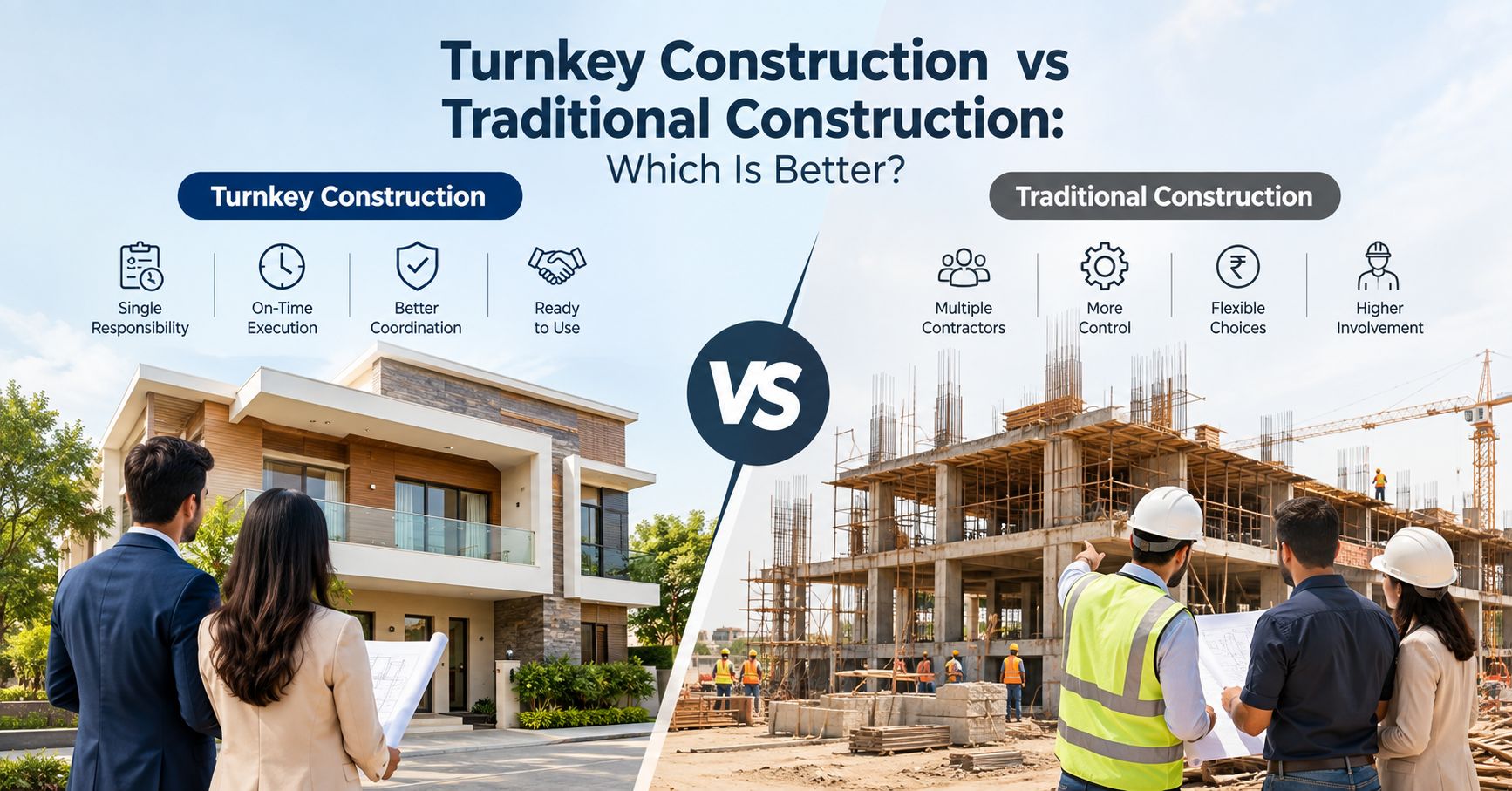
When Is Turnkey Commercial Construction Useful?
A turnkey approach can be useful when a client wants one primary team to coordinate multiple stages of the project.
Depending on the agreement, turnkey construction can cover:
- Architectural planning
- Structural engineering
- Procurement
- Civil construction
- Electrical work
- Plumbing
- Interior work
- Landscaping
- Final finishing
- Project management
RR Infra describes its turnkey model as covering design, permits, engineering, procurement, construction and finishing, with services extending across commercial, hospitality, industrial and residential projects.
However, the exact scope always depends on the individual contract. Clients should check inclusions, exclusions, specifications and responsibilities before signing.
How to Compare Two Commercial Construction Companies
If you have shortlisted two or more companies, do not compare only the final quotation.
Instead, compare:
- Project Experience: Have they handled similar commercial projects?
- Scope: Are both quotations covering the same work?
- Materials: Are the specifications and quality levels comparable?
- Timeline: What is the expected completion period?
- Project Management: Who will supervise and coordinate the work?
- Quality Control: What inspections and testing procedures are followed?
- Documentation: Are drawings, BOQ, specifications and changes properly documented?
- Post-Handover Support: What happens after the project is completed?
A slightly different quotation can represent a completely different scope, so comparing the complete package is more useful than comparing only the final amount.
Common Mistakes to Avoid When Hiring a Commercial Construction Company
Choosing Only on the Lowest Price
The cheapest quotation may exclude important work or use different material specifications. Always compare the complete scope.
Not Checking Similar Projects
A company's experience should match the requirements of your project as closely as possible.
Starting Without a Detailed Scope
Ambiguous responsibilities can create disputes during construction.
Ignoring Quality-Control Procedures
Material and workmanship checks should be planned throughout construction rather than only at the end.
Not Defining Change Procedures
Commercial projects can change during execution. The contract should explain how additional work, revised specifications and cost changes will be handled.
Failing to Plan the Timeline
A construction schedule should include realistic milestones and dependencies rather than relying only on a final completion date.
Final Thoughts
Hiring the right construction partner is an important decision because commercial projects involve significant investment, multiple technical disciplines and strict operational requirements. A proper evaluation should consider project experience, technical expertise, quality control, project management, documentation, scope and timeline rather than focusing only on the initial quotation.
The right commercial construction company should be able to understand your project's purpose, coordinate the required construction activities and clearly communicate responsibilities from planning through completion. Reviewing previous projects, comparing complete scopes and defining expectations in writing can help create a more structured and transparent construction process.