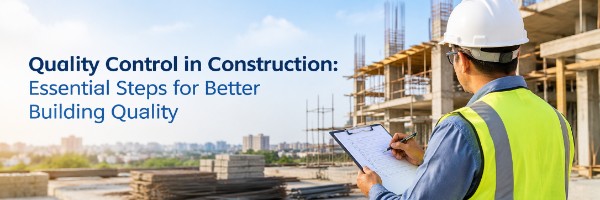
A building’s strength, safety, and durability depend on material quality, workmanship, and proper site supervision. Without regular inspections, construction projects may face cracks, water leakage, and costly repairs.
Quality control in construction ensures that every stage meets the required specifications and safety standards. From concrete testing to waterproofing and finishing, regular checks help prevent defects and improve building quality. A systematic approach also reduces rework, controls costs, and supports long-term building performance.
Key Takeaways
- Quality control in construction should begin during planning and continue until project handover.
- Material inspections and concrete testing help verify construction quality.
- Foundation, structural work, and waterproofing require stage-wise checks.
- Electrical and plumbing systems should be tested before concealment.
- Documenting defects and corrective actions improves accountability.
- Regular site supervision helps reduce rework and support long-term building performance.
Why Is Quality Control Important in Construction?
Quality control is essential because construction defects can affect a building's safety, functionality, appearance, and maintenance costs.
Here are the main benefits:
- Improves structural safety: Helps identify construction issues before they compromise structural performance.
- Reduces repair costs: Detecting defects early can prevent expensive corrective work.
- Improves material quality: Ensures that construction materials meet the required specifications.
- Supports project timelines: Reduces delays caused by rework and repeated inspections.
- Enhances durability: Proper construction practices help buildings withstand regular use and environmental conditions.
- Improves client confidence: Documented inspections and test reports provide greater transparency.
Effective construction quality control is particularly important for large residential developments, commercial buildings, hotels, and **turnkey construction projects. **
7 Essential Steps for Quality Control in Construction
1. Review Construction Drawings and Specifications
Quality control begins before construction starts. The project team should review architectural drawings, structural designs, material specifications, and relevant approvals.
The drawings must be coordinated to identify potential conflicts between structural elements, plumbing lines, electrical systems, and other building services.
Before work begins, establish clear quality requirements, inspection points, testing procedures, and responsibilities. This helps contractors understand the expected standards from the beginning.
2. Inspect Construction Materials Before Use
Material quality directly influences the performance and durability of a building. Materials should be checked before they are approved for use on-site.
Important material checks include:
- Cement: Check packaging, grade, storage conditions, and applicable specifications.
- Steel reinforcement: Verify grade, diameter, condition, and relevant test certificates.
- Sand and aggregates: Check cleanliness, grading, and compliance with project requirements.
- Bricks and blocks: Inspect dimensions, visible damage, and relevant quality requirements.
- Water: Confirm suitability for concrete mixing and curing.
- Finishing materials: Check product specifications, compatibility, and approved samples.
Where required, materials should undergo testing through suitable laboratories. Proper storage is equally important because moisture, contamination, and poor handling can affect material quality.
3. Monitor Foundation and Structural Work
Foundation and structural work require careful inspection because errors at these stages can affect the entire building.
Before concrete is poured, the site team should check reinforcement placement, cover, spacing, formwork stability, and dimensions against approved structural drawings.
During concrete placement, monitor the mix specifications, workability, placement method, compaction, and curing requirements. Concrete sampling and strength testing should be carried out according to the project specifications and applicable standards.
These checks help identify potential problems early and support the required structural performance.
4. Follow Proper Waterproofing Procedures
Water leakage is a common construction concern that can damage finishes, encourage dampness, and affect the long-term usability of a building.
Quality control should cover waterproofing in bathrooms, terraces, balconies, basements, and other areas exposed to water.
Important checks include:
- Preparing the surface before applying waterproofing materials.
- Applying the approved system according to manufacturer instructions.
- Inspecting joints, corners, and pipe penetrations.
- Conducting appropriate water-retention or leakage tests where required.
- Checking drainage slopes and outlet connections.
Waterproofing should be inspected before protective layers, tiles, or other finishes conceal the treated surface.
5. Check Electrical and Plumbing Installations
Electrical and plumbing systems must be installed according to approved drawings, technical specifications, and applicable safety requirements.
For electrical work, inspect wiring, cable sizing, earthing, protective devices, connections, and circuit testing as appropriate.
For plumbing, check pipe materials, joint quality, water pressure, leakage, drainage slopes, and discharge connections.
Testing should be completed before concealed services are covered by plaster, flooring, ceilings, or wall finishes. Qualified professionals should perform the relevant inspections and tests.
6. Inspect Finishing and Workmanship
Finishing quality affects both the appearance and everyday usability of a building. Regular inspections help maintain consistent workmanship throughout the project.
Key areas to inspect include:
- Wall plastering and surface alignment.
- Flooring levels, tile alignment, and joint finishing.
- Door and window installation.
- Paint coverage and surface preparation.
- False ceilings and interior finishes.
- Glass, aluminium, and hardware installation.
Approved samples, drawings, and project specifications should guide the inspection process. Any defects should be recorded and corrected before the work is accepted.
7. Maintain Inspection Records and Correct Defects
A quality-control process is effective only when inspections are documented and identified problems are resolved.
Maintain records of material approvals, laboratory test reports, site inspections, photographs, and corrective actions.
When work fails to meet the required specifications, document the issue, identify its cause, and establish a corrective-action plan. The affected work should be reinspected before approval.
A final inspection should also verify that outstanding defects have been addressed and that relevant testing and handover documents are available.
Common Construction Quality Control Mistakes to Avoid
Even well-managed projects can experience quality issues when inspections are inconsistent.
Common mistakes include:
- Using materials without checking specifications.
- Skipping concrete sampling or required tests.
- Covering electrical and plumbing installations before inspection.
- Neglecting waterproofing tests.
- Rushing work to meet deadlines.
- Failing to document defects and corrective actions.
- Making site changes without the necessary technical approval.
A planned inspection schedule, trained site personnel, and clear accountability can help reduce these risks.
How RR INFRA Supports Construction Quality
Quality construction requires coordination between design, procurement, contractors, and site supervision. A structured project management approach helps ensure that materials, workmanship, and construction activities are monitored throughout the project.
RR INFRA provides turnkey construction and project management consultancy services for residential and commercial developments. Its approach includes site supervision, material quality checks, coordination, and monitoring construction activities against project requirements.
For property owners and businesses planning a new building, working with an experienced construction team can make quality management more organised and transparent. The inspection and testing process should always be tailored to the project's design, specifications, and applicable standards.
Conclusion
Quality control in construction is essential for delivering safe, durable, and reliable buildings. From material selection and structural inspections to waterproofing and finishing, regular quality checks help prevent defects, reduce rework, and ensure better construction outcomes.
With professional site supervision and effective project management, RR INFRA supports quality-focused residential and commercial construction projects. Planning your next construction project? Contact RR INFRA to discuss your requirements and build with confidence.